
The question “what are the PSA alternatives?” had a clean answer two years ago: Beckett or SGC. Both were separate companies with their own incentives and grade standards. That answer no longer holds. Collectors Holdings, PSA's parent company, now owns Beckett Grading Services (BGS) and SGC too. Add PWCC Marketplace (the dominant auction platform for high-end slabs) to that list, and Collectors Holdings controls the entire pipeline: grading, selling, and collecting fees at every step.
CGC is the only fully independent major grader left standing. That changes the conversation. Choosing a “PSA alternative” in 2026 isn't only about price or turnaround. For collectors who care about conflicts of interest, it's about whether the company grading their card has a financial stake in the price that card sells for.
This guide breaks down all four major graders with 2026 prices, turnaround times, and real resale data so you can make that call yourself.
Why “PSA Alternatives” Means Something Different in 2026
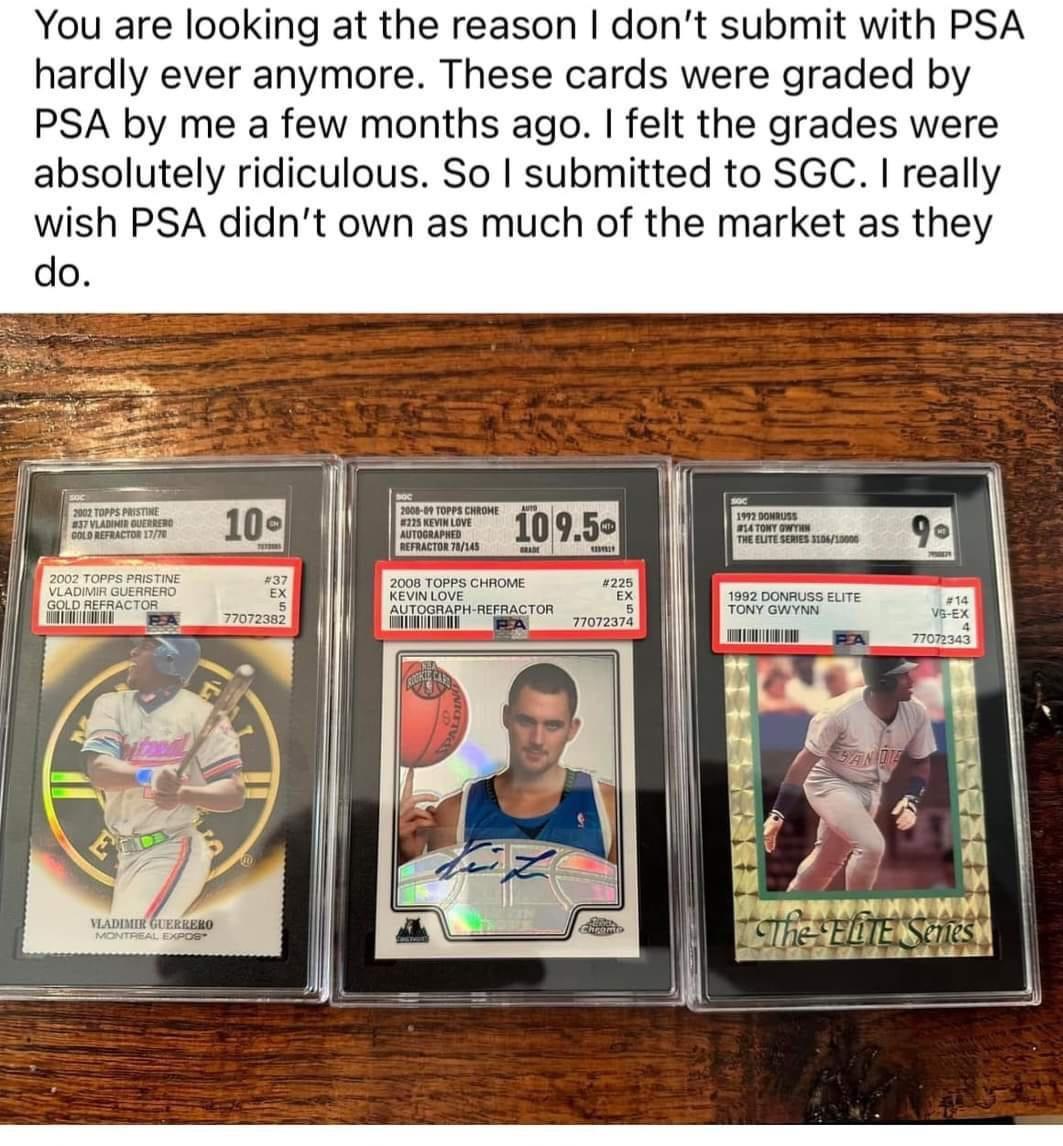
The December 2025 PSA buyback scandal cracked the community's trust in a way years of turnaround complaints never did. Collectors discovered PSA had been buying back PSA 9 cards from the market, then re-slabbing them as PSA 10s and selling at 3x to 10x the buyback price. The conflict was obvious: a grading company profiting on the grade it assigns isn't a neutral third party.
Congressman Pat Ryan pushed that story further when he called on the FTC to probe Collectors Holdings for antitrust violations. His case rests on one number: Collectors Holdings controls roughly 80% of the card grading market through PSA, BGS, and SGC combined.
Reddit collectors on r/psa and r/sportscards were direct about it. “The fact that they grade it, list it on PWCC, and collect the auction cut is wild,” wrote one thread with hundreds of upvotes. “That's not a grading company, that's a vertically integrated monopoly.”
PSA slabs still command the highest resale premiums on eBay. That's the stubborn market reality. But collectors now have a principled reason to consider CGC that has nothing to do with cost, and CGC's growing market acceptance means that choice no longer carries a significant financial penalty for modern Pokemon and MTG cards.
The Four Main Grading Services: Quick Comparison
The table below covers all four major graders on the factors that affect your wallet and your resale price. 2026 prices, current as of April.
| Feature | PSA | CGC | BGS (Beckett) | SGC |
|---|---|---|---|---|
| Parent Company | Collectors Holdings | Independent | Collectors Holdings | Collectors Holdings |
| Bulk Price Per Card | $24.99 | $15.00 | $20.00 | $15.00 |
| Membership Required | Yes ($99/yr for bulk) | No | No | No |
| Bulk Turnaround | 65 business days | 50 business days | 60 business days | 30 business days |
| Sub-grades | No | No | Yes (4 categories) | No |
| Best For | High-value resale | Pokemon, MTG | Vintage sports | Vintage sports |
| Resale Premium vs PSA 10 | Benchmark | 5-10% less (modern) | 10-20% less | 15-25% less |
A few things stand out. CGC and SGC tie on bulk price at $15/card, and neither requires a membership. PSA's $24.99 bulk rate hides a $99/year membership cost that PSA collectors need to factor into their per-card math. BGS sits in the middle at $20 with no membership requirement.
The resale premium column tells the more important story. PSA 10 still outsells CGC 10 and BGS 10 on eBay for most cards. That gap is smallest for modern Pokemon (5-10%), where CGC has built real market acceptance over the past two years. The gap is largest for vintage sports cards, where PSA's brand dominance and authentication history keep the premium at 20-30%.
CGC: The Best PSA Alternative for Pokemon in 2026
CGC graded 156% more cards year-over-year in 2025 according to their own submission data, and the growth shows in eBay sold prices. Two years ago, collectors took a 25-30% haircut selling CGC 10s vs PSA 10s for modern Pokemon. That gap is now 5-10% for sets printed after 2022. On a $200 card, that's a $10-20 difference, easily covered by CGC's lower submission cost.
| Service Level | Price Per Card | Turnaround | Min. Cards |
|---|---|---|---|
| Economy | $15.00 | 50 business days | 20 |
| Standard | $25.00 | 30 business days | 1 |
| Express | $50.00 | 10 business days | 1 |
| Walk-Through | $150.00 | 1-2 business days | 1 |
CGC's Economy tier at $15/card is the headline number. No membership required, and the 50-business-day turnaround is faster than PSA bulk at 65 business days. Total cost per card at CGC Economy, including round-trip shipping, runs $27-33 versus $40-45 at PSA Value Bulk (with membership amortized). That $12-15 difference shifts the break-even point down to cards around $35-40 raw instead of $50+ at PSA.
The slab aesthetics matter to some collectors. CGC uses a clean double-panel design with the card grade printed large on the front label. The label is color-coded by grade: gold for 10, blue for 9, green for 8 and below. Collectors on r/pokemontcg generally like the CGC slab design, though it doesn't have the brand recognition of a PSA red label.
CGC's independence is now an active marketing point. Several dealers who boycotted PSA after the December 2025 scandal shifted their entire volume to CGC. @DannypTCG on X documented his switch publicly in January 2026. Those boycotts haven't collapsed PSA's market position, but they've accelerated CGC's growth in the Pokemon segment.
Submit to CGC — $15/card Economy, no membership affiliateFor Pokemon collectors, CGC is the clearest PSA alternative in 2026. The cost difference is real, the resale gap has narrowed, and CGC is the only major grader without a corporate parent that also runs an auction platform.
BGS (Beckett): Best for Sports Cards, Now Under PSA's Parent
Beckett Grading Services does something no other major grader does: it assigns four sub-grades alongside the main grade. Every BGS slab shows centering, corners, edges, and surface as individual scores. Collectors who want to know exactly where a card lost points get that transparency from BGS. Nobody else provides it.
That sub-grade system makes BGS the preferred choice for vintage sports cards. A BGS 9.5 Pristine with all four sub-grades at 9.5 or above (called a “Quad 9.5”) commands prices close to a PSA 10 in the vintage sports market. Serious sports collectors on r/sportscards track sub-grades as closely as the main grade, and BGS slabs display that information on the slab itself.
BGS bulk submissions start at $20/card with no membership required. Turnaround at bulk runs about 60 business days. The BGS slab uses a distinctive clear case with a black inner sleeve and sub-grade sticker, which has its own aesthetic following among sports collectors.
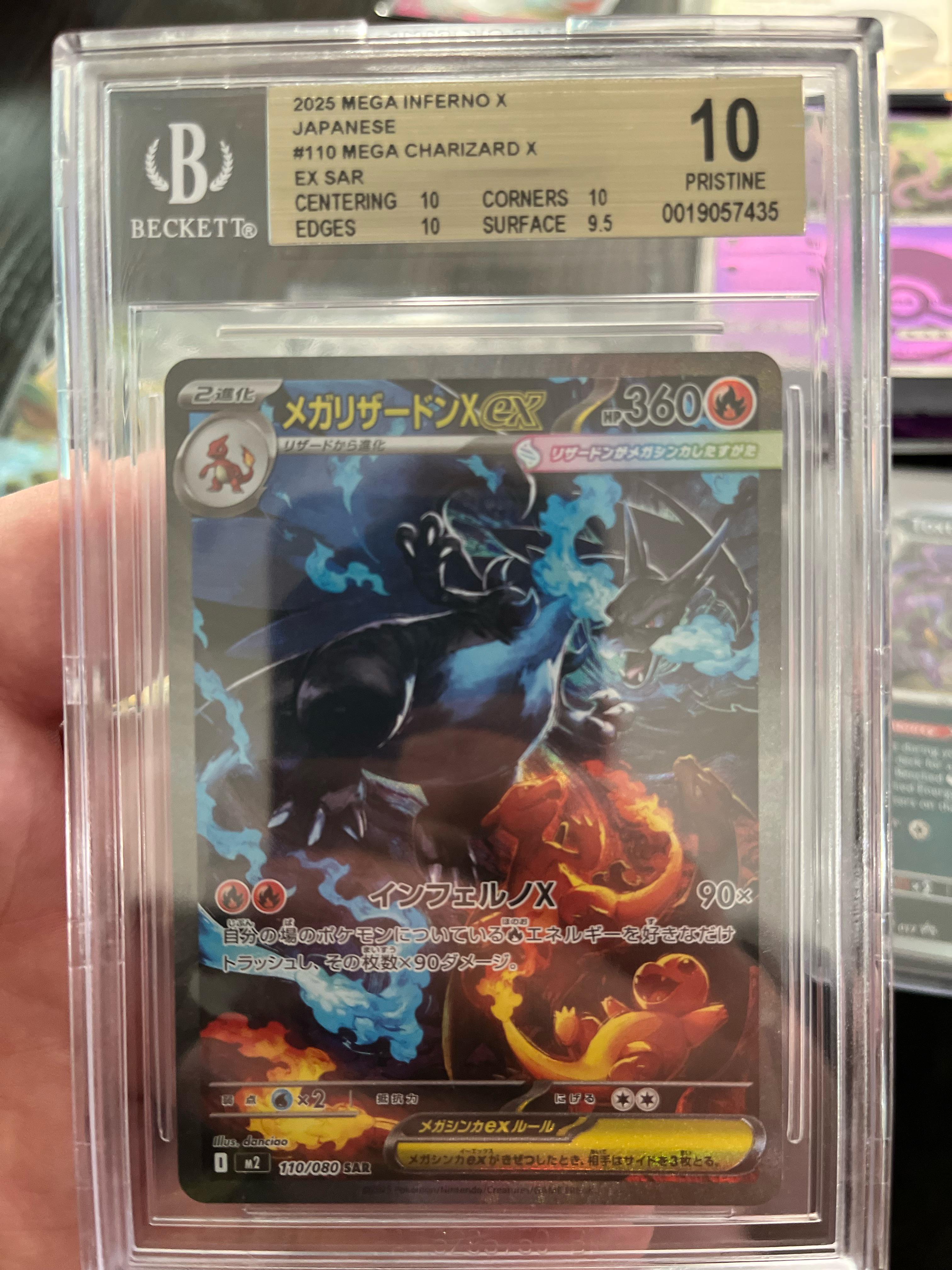
The complication is ownership. Collectors Holdings acquired Beckett in 2019, years before they bought SGC and built out PWCC. BGS operates as a distinct brand with its own graders and standards, but the corporate parent is the same as PSA. Collectors who switched away from PSA for independence reasons don't get that independence from BGS.
For vintage sports cards where sub-grades matter and you're not specifically concerned about the Collectors Holdings angle, BGS remains a strong choice. The sub-grade system is useful, and BGS 9.5 Pristines hold strong value in that market. For Pokemon or MTG collectors, CGC offers more.
Submit to BGS — Sub-grades, $20/card bulk affiliateSGC: Fastest Turnaround and the Tuxedo Slab
SGC built its reputation on speed and aesthetics. The black-and-white “tuxedo slab” design has a cult following among vintage sports collectors who find PSA's red label generic and BGS's clear case busy. SGC keeps the design minimal, and the contrast between black holder and white label reads cleanly in display cases.
The speed is real. SGC's bulk turnaround runs 25-35 business days, roughly half of PSA's 65-business-day window. For collectors who want to flip graded cards quickly, that turnaround difference matters. A card sitting in grading for 13 weeks versus 7 weeks is capital tied up that you can't deploy elsewhere.
SGC bulk pricing starts at $15/card with no membership required, matching CGC's Economy rate. Total cost per card including round-trip shipping runs $27-33, the same range as CGC.
SGC's weakness is market reach. SGC 10s sell for 15-25% less than PSA 10 equivalents on eBay for most categories, a larger gap than CGC's 5-10% for modern Pokemon. That gap closes in vintage sports, where SGC has stronger brand recognition and a loyal buyer base. For a 1960s Topps Mickey Mantle or a 1970s football card, SGC authentication carries genuine weight with serious vintage buyers.
Like BGS, SGC is under Collectors Holdings. Collectors Holdings acquired SGC in 2021. Collectors who want true independence from the PSA corporate family don't find it here either.
SGC works best for: vintage sports cards where the tuxedo slab aesthetic matters to you, turnaround speed is your priority, and you're selling to vintage sports buyers who know the brand.
When to Stick With PSA Despite Everything
PSA has real problems in 2026. The buyback scandal damaged trust. The antitrust investigation created regulatory uncertainty. PSA grading costs went up $3/card in February 2026. And the corporate parent now controls both grading and the auction platform where collectors sell their slabs.
None of that changed the eBay sold data. PSA 10s still sell for more than CGC 10s, BGS 10s, or SGC 10s in almost every card category. The premium ranges from 5-10% for modern Pokemon to 20-30% for vintage sports. On a card selling for $500 PSA 10, that gap is $25-150 in real money.
For high-value cards where maximum resale matters, PSA remains the rational choice:
- Cards with a PSA 10 value above $300, where the resale premium exceeds the extra submission cost
- Vintage sports cards worth $200+ raw, where PSA authentication carries the strongest buyer trust
- Any card you plan to sell at a major auction or through a dealer who prices by PSA standards
- PSA grading 9 vs 10 situations where PSA's market data is most granular
Collectors who care about the conflict-of-interest issue have every reason to choose CGC. Collectors who care primarily about maximum sale price on a high-value card should weigh the PSA premium against their personal feelings about the company. Both positions are reasonable. We ran the full ROI math in is PSA grading worth it after the scandal if you want the numbers.
View PSA Submission Pricing affiliateShould You Switch Graders After the PSA Scandal?
The practical answer depends on what you're grading and why.
The collectors making money from grading in 2026 aren't picking a grader on brand loyalty. They're running the math on each submission. PSA for a $200+ card going to serious collectors who pay PSA premiums. CGC for modern Pokemon under $200 where the 5-10% PSA gap doesn't cover the cost difference. BGS for vintage sports where sub-grades justify the premium in the buyer's mind. SGC for vintage sports when speed matters more than the last few percent on resale.
The monopoly concern is real, and collectors on r/sportscards are vocal about it. But Collectors Holdings owning 80% of the market doesn't automatically mean each grader grades worse. It means the conflict of interest from the buyback scandal extends to all three Collectors Holdings brands, not just PSA. CGC avoids that concern entirely.
The monopoly argument against Collectors Holdings is real, but it shouldn't be the only reason you choose CGC. For modern Pokemon collectors with cards under $200 raw, CGC is the better financial choice even before you factor in independence. The cost difference alone, $12 to $15 less per card after shipping, changes the break-even math on cards in the $35 to $50 raw range. That's not a political statement. That's arithmetic.
The resale gap has closed enough to matter. Two years ago, choosing CGC over PSA for a $150 card meant accepting a $35 to $45 discount on resale. Today it means accepting $10 to $20. On a card where grading costs $15 less at CGC, you come out close to flat or slightly ahead. That calculation keeps shifting as CGC's market share in Pokemon grows.
The independence point adds something real for collectors who've followed the buyback scandal. PSA doesn't just grade cards. Through PWCC, Collectors Holdings sells them. A company that profits when graded values go up has a financial interest in what numbers its graders write down. CGC doesn't have that conflict. Whether that actually affects grading decisions is unverifiable, but the structural incentive exists and reasonable collectors can decide how much weight to give it.
PullRate's position: use PSA for cards worth $300 or more where the resale premium covers the extra submission cost and you're selling to buyers who pay PSA prices. Use CGC for modern Pokemon under $200 where the math now works and the independence argument is a bonus. Don't use BGS or SGC expecting independence from Collectors Holdings. You won't get it.
“CGC grades are now selling within 5% of PSA for modern sets on eBay. I switched my entire operation to CGC after the buyback thing came out. The math just works better.”
— r/pokemontcg“PSA, BGS, and SGC are all under the same umbrella. CGC is the only one that's truly independent. I don't care if PSA 10s sell for slightly more — I'm not comfortable sending cards to a company with that conflict of interest.”
— r/sportscards“SGC turnaround is insane right now. Got my vintage Topps set back in 22 business days. The tuxedo slabs look great too. Not everything needs to be PSA.”
— r/sportscards“The fact that Collectors Holdings owns PSA, SGC, and Beckett — and also owns PWCC Marketplace where you sell the cards — is wild. They grade it, sell it, and take the cut. That's not a grading company, that's a vertically integrated monopoly.”
— r/psaFrequently Asked Questions
What are the best alternatives to PSA grading?
CGC is the strongest PSA alternative in 2026 for Pokemon and MTG collectors. It's independently owned, starts at $15/card for bulk submissions with no membership required, and the price gap vs PSA 10 has narrowed to 5-10% for modern sets. SGC is the best alternative for vintage sports cards where turnaround speed matters. BGS works for sports collectors who want sub-grade detail, though BGS and SGC are now both under Collectors Holdings (same parent as PSA).
Is CGC grading as good as PSA?
CGC grades now sell for 90-95% of PSA prices for modern Pokemon cards on eBay, up from roughly 70-75% two years ago. CGC is independently owned, which makes it the only major grader without a corporate parent that also runs a card auction platform. For modern Pokemon and MTG, CGC is a comparable alternative. For vintage sports, PSA still commands a larger resale premium.
Are PSA, BGS, and SGC all the same company?
Yes. Collectors Holdings owns PSA, Beckett Grading Services (BGS), and SGC, giving the company roughly 80% of the card grading market. Collectors Holdings also owns PWCC Marketplace, a leading auction platform for high-end slabs. CGC is the only fully independent major grader remaining after these acquisitions.
What is the cheapest card grading service in 2026?
SGC and CGC both start at $15/card for bulk submissions with no membership fee, making them the cheapest major graders. PSA Value Bulk is $24.99/card and requires a $99/year Collectors Club membership. BGS bulk is $20/card with no membership. Including round-trip shipping, CGC and SGC total $27-33 per card at bulk versus $40-45 at PSA bulk.
Does CGC grading hold its value like PSA?
For modern Pokemon and MTG, CGC 10 grades sell for 5-10% less than PSA 10 equivalents on eBay, down from a 25-30% gap two years ago. The gap has narrowed because CGC has built real market acceptance in those categories. For vintage sports cards, PSA still commands a larger premium of 20-30% over CGC.
Is BGS grading still worth it in 2026?
BGS sub-grades make it the preferred choice for vintage sports collectors where condition nuance matters and buyers pay attention to individual sub-scores. A BGS 9.5 Pristine (Quad 9.5) commands prices close to PSA 10 in vintage sports. The caveat: BGS is under Collectors Holdings, the same parent company as PSA, so it doesn't offer independence from the corporate conflict-of-interest concerns.
Why is there an antitrust investigation into card grading?
Congressman Pat Ryan asked the FTC to investigate Collectors Holdings, which controls PSA, BGS, and SGC, around 80% of the card grading market. The investigation focuses on whether that concentration allows monopolistic pricing and whether grading companies that also run auction platforms have an inherent conflict of interest in setting grades. Coverage of the probe ran in Yahoo Sports and Athlon Sports in early 2026.