
Collectors on r/pokemontcg have been asking the same question all year: “Should I send this to PSA or CGC?” The answer used to be simple. PSA slabs sold for more, end of story. In 2026, that answer has gotten complicated. PSA raised prices again in February. CGC grew submissions 156% year-over-year. And the PSA buyback scandal forced collectors to think about something they never had to before: whether their grading company has a financial conflict of interest.
This guide gives you the numbers, the resale data, and a clear recommendation so you can stop wondering and start submitting.
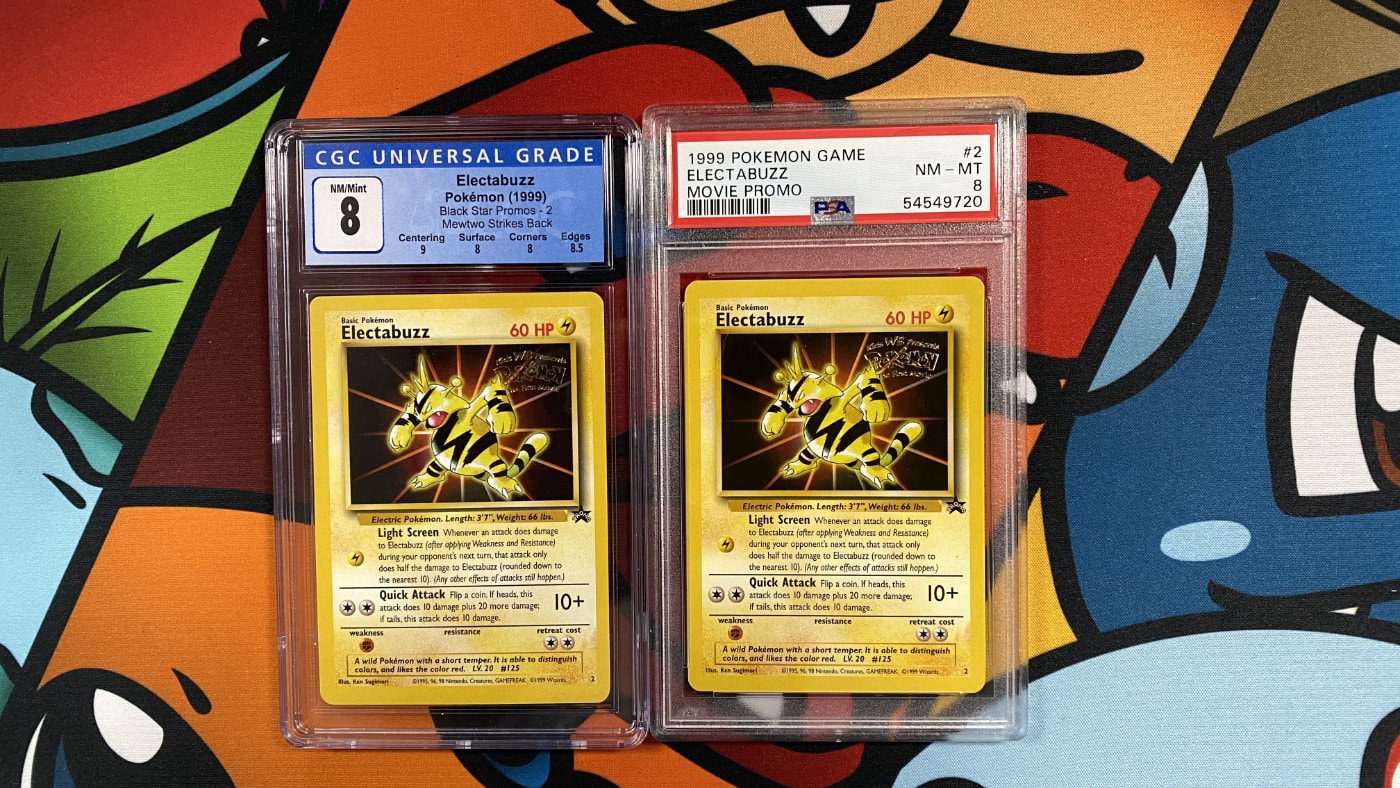
Head-to-Head: PSA vs CGC at a Glance
| Feature | PSA | CGC |
|---|---|---|
| Parent Company | Collectors Holdings (also owns BGS, SGC, PWCC) | Independent |
| Bulk Price Per Card | $24.99 | $15.00 |
| Membership Required | Yes ($99/yr Collectors Club) | No |
| Bulk Turnaround | 65 business days | 50 business days |
| Resale Premium (Modern Pokemon) | Benchmark | 5-10% less |
| Resale Premium (Vintage Sports) | Benchmark | 20-30% less |
| Slab Design | Red label, classic look | Color-coded label by grade |
| Sub-grades | No | No |
Those numbers show the surface-level differences. PSA costs $10 more per card at bulk, requires a $99/year membership, and takes 15 extra business days. CGC is cheaper across the board and has no membership gate. But PSA slabs still sell for more on eBay, and that premium is the entire reason people pay the higher fee.
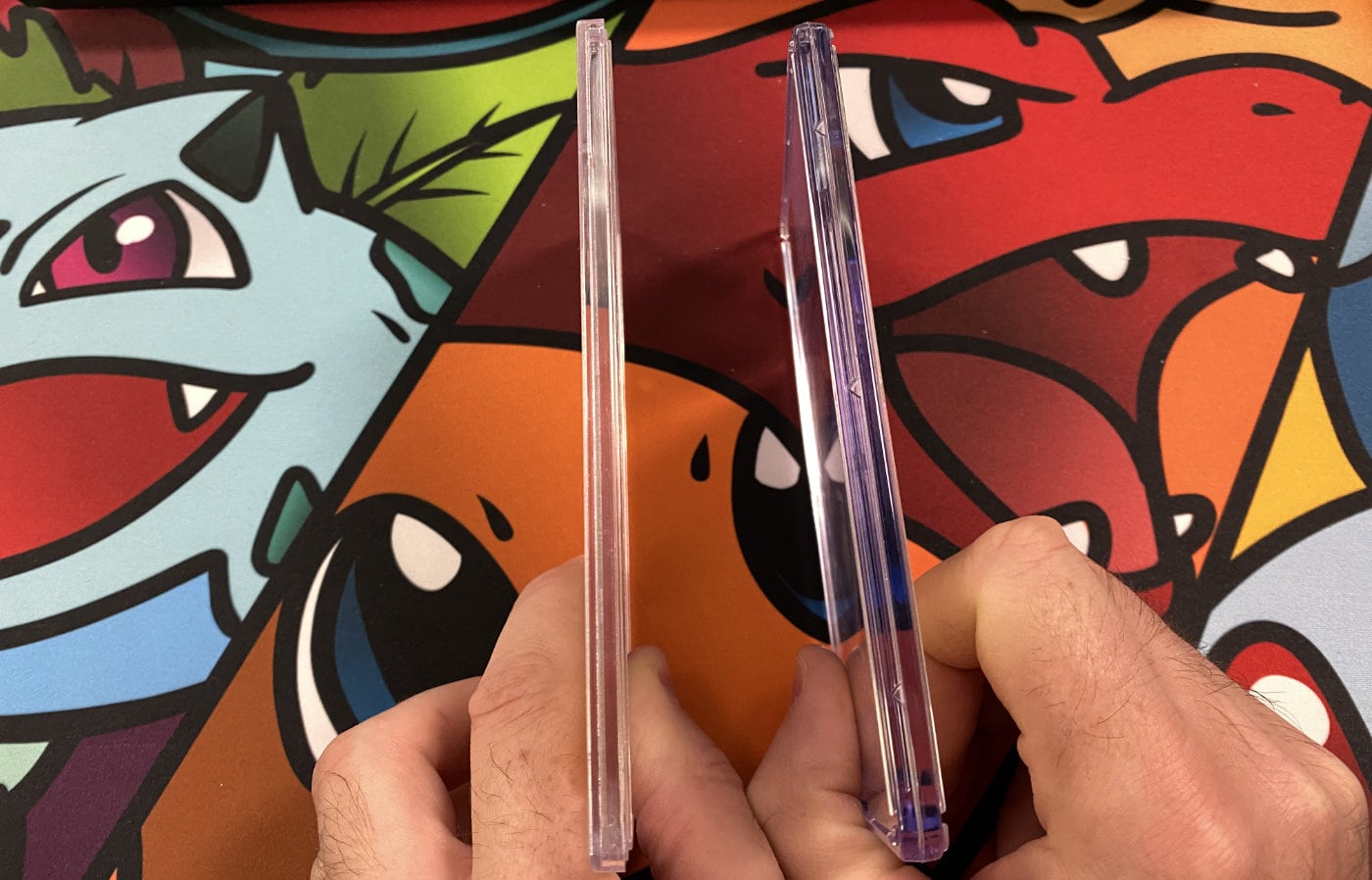
The question isn't which grader is “better.” It's whether PSA's resale premium on your specific card justifies the extra cost.
When PSA Wins
PSA is the right call in three situations:
- Vintage sports cards worth $500+. A PSA 10 1986 Fleer Michael Jordan sells for 25-30% more than a CGC 10 of the same card. On a $5,000 card, that's $1,250 to $1,500 extra. The $10 grading fee difference is irrelevant at that price point.
- Cards you plan to sell at auction. Heritage Auctions and PWCC (owned by PSA's parent company) favor PSA slabs in their featured lots. Auction houses know bidders trust PSA labels, and that trust translates to hammer prices.
- Pre-2020 Pokemon cards in the $200+ range. Base Set Charizards, Gold Stars, and other vintage Pokemon hold a 15-20% PSA premium that still covers the cost gap.
If you're grading cards worth over $100 raw and plan to sell them within a year, PSA's brand premium will likely net you more after fees. Check our full PSA cost breakdown before submitting to make sure the math works at your tier.
Submit to PSA — best for high-value resale affiliateWhen CGC Wins
CGC is the better choice for most collectors in 2026, and the reasons go beyond price:
- Modern Pokemon and MTG cards worth $35-80 raw. CGC 10s on sets like Prismatic Evolutions and Surging Sparks sell within 5-10% of PSA 10s on eBay. At a $15 grading fee vs $25 (with membership), the cost savings alone close that gap.
- Budget submissions of 20+ cards. CGC Economy at $15/card with no membership beats PSA Value Bulk at $24.99 plus $99/year. On a 50-card submission, you save over $500 with CGC.
- Collectors who care about independence. PSA's parent Collectors Holdings owns PSA, BGS, SGC, and PWCC Marketplace. CGC is the only fully independent major grader. After the buyback scandal, that independence carries weight.
CGC also turns cards around faster. Their Economy tier averages 50 business days compared to PSA's 65 at bulk. For collectors who don't want to wait three months, that matters.
Submit to CGC — $15/card, no membership affiliateThe Resale Gap Is Shrinking
Two years ago, CGC 10s sold for 25-30% less than PSA 10s across most categories. That gap has narrowed fast. Here's what eBay sold data shows in April 2026:
- Modern Pokemon (2023-2026 sets): CGC 10 sells for 5-10% less than PSA 10
- Modern MTG: CGC 10 sells for 8-12% less than PSA 10
- Vintage sports (pre-1990): CGC 10 sells for 20-30% less than PSA 10
- Modern sports (2020+): CGC 10 sells for 10-15% less than PSA 10
The trend line matters more than the current number. CGC's 156% submission growth in 2025 means more CGC slabs hitting the market, which means more buyer familiarity, which means the gap keeps closing. Collectors who submitted modern Pokemon to CGC two years ago at a 25% discount are now holding slabs that sell at a 5% discount. That's a meaningful shift.
For vintage sports, PSA's lead looks durable. Decades of auction records, population reports, and collector trust built a moat that CGC hasn't cracked yet. If you're grading a 1952 Topps Mantle, send it to PSA. No contest.
Cost Breakdown: What You Pay Per Card
Grading fees aren't the whole story. Shipping, insurance, and membership costs change the math. Here's the all-in cost per card at each grader's cheapest tier:
| Cost Factor | PSA (Value Bulk) | CGC (Economy) |
|---|---|---|
| Grading Fee | $24.99 | $15.00 |
| Membership (amortized per 50 cards) | $1.98 | $0.00 |
| Shipping to Grader | $8-12 | $8-12 |
| Return Shipping | $6-8 | $4-6 |
| Total Per Card | $40-47 | $27-33 |
| Break-even Raw Value | ~$55+ | ~$38+ |
The $13-14 per-card difference adds up. On a 50-card submission, you'd pay roughly $2,000-2,350 at PSA versus $1,350-1,650 at CGC. That's $500-700 back in your pocket. For that savings to make sense at PSA, your cards need to sell for enough extra to cover the gap. On a $50 modern Pokemon card, PSA's 5-10% premium gives you $2.50-5.00 extra per card. That doesn't cover the $13-14 extra you paid to grade it.
The break-even point shifts depending on card value. For cards worth $200+ graded, PSA's premium covers the fee difference. For cards worth $50-150 graded, CGC's lower cost wins. Run the numbers on your specific cards before deciding. Our PSA ROI analysis walks through the math in detail.
The Independence Factor
Cost and turnaround matter, but the ownership structure deserves its own look.
Collectors Holdings owns PSA, BGS, SGC, and PWCC Marketplace. That's the grading, the auction platform, and roughly 80% of the grading market under one corporate roof. The December 2025 buyback scandal showed what can happen when a grading company has a financial stake in the grades it assigns: PSA bought back PSA 9s, re-slabbed them as 10s, and sold them at 3x to 10x markup.
CGC has no marketplace. CGC doesn't buy or sell cards. CGC's only revenue comes from grading fees. That structure removes the conflict of interest that burned PSA collectors last year.
For some collectors, independence is the deciding factor regardless of cost. For others, PSA's resale premium outweighs the corporate structure concerns. Both positions are reasonable. But you should know the ownership picture before you choose.
PullRate's take: CGC is the better default for most collectors in 2026. The math favors CGC on cards worth under $150 graded, which covers the vast majority of submissions. The resale gap on modern Pokemon and MTG has shrunk to 5-10%, and CGC's lower fees more than offset that difference.
Send to PSA when you have vintage sports cards, high-value vintage Pokemon, or cards you plan to consign at auction. PSA's brand premium still earns its keep at the top end of the market. For everything else, CGC saves you money, returns cards faster, and doesn't carry the baggage of a parent company that grades, sells, and profits from the same cards.
The PSA 9 vs 10 price gap also matters here. If your card is borderline between a 9 and a 10, the grader you choose changes your expected return. Factor grade probability into your decision, not just fees.
FAQ
Is CGC grading as reputable as PSA?
CGC has built strong market acceptance for modern Pokemon and MTG cards. Their parent company, Certified Collectibles Group, has graded coins and comics for over 20 years. For modern sets, CGC 10s sell within 5-10% of PSA 10s on eBay. For vintage sports, PSA still carries more weight with buyers and auction houses.
Can I crack a CGC slab and resubmit to PSA?
Yes, and some collectors do this when CGC grades a card a 10 and they want the PSA premium. You'll pay the CGC fee, the PSA fee, and risk PSA grading it lower. The strategy only makes financial sense on cards worth $300+ graded, where PSA's premium covers both grading fees.
Did PSA raise prices in 2026?
PSA increased prices on February 10, 2026, adding $3-5 per card across five service tiers. Value Bulk went from $22 to $24.99. The increase widened the cost gap between PSA and CGC. See our full PSA pricing breakdown for current rates at every tier.
Which grader is better for Pokemon cards?
CGC for modern Pokemon (2022 and newer). The 5-10% resale gap doesn't justify PSA's higher fees on cards worth under $150 graded. For vintage Pokemon like Base Set holos and Gold Stars, PSA's 15-20% premium makes it the better choice when you plan to sell.
Is CGC or PSA faster?
CGC is faster at comparable price points. CGC Economy (50 business days) beats PSA Value Bulk (65 business days) by three weeks. CGC Express (10 business days, $50/card) and PSA Express ($75/card, 10 business days) are similar in speed, but CGC costs $25 less.