
A cheap toploader can scratch a $400 card in the three seconds it takes to slide it in. A too-thin loader on a thick patch auto bows the card the moment you tape the top. This guide ranks the best toploaders for sports cards in 2026 by real use case: shipping raw sales, submitting to PSA, storing chase hits, and buying in bulk for rip-and-ship volume. We pulled sentiment from r/sportscards, Blowout Forums, and Collectors Universe to flag the quality drift that hasn't shown up in competitor round-ups yet.
Quick Picks: Best Toploaders for Sports Cards at a Glance
Scan the table. Full reasoning follows below.
| Use case | Pick | Why | Approx. price |
|---|---|---|---|
| Best overall | Cardboard Gold 35pt | PSA-preferred clarity, rigid build | $0.30-$0.35 each |
| Best budget | BCW 35pt (100-ct) | Cheapest per unit at scale, consistent quality | $0.08-$0.10 each |
| Best for PSA submissions | Card Saver I (semi-rigid) | PSA intake preference, cheaper than hard loaders | $0.10 each |
| Best for thick cards | Ultra Pro 100pt or Cardboard Gold 130pt | Holds patch autos flat, no bow | $0.40-$0.70 each |
| Best bulk buy | BCW 35pt 1000-ct brick | ~$0.06 per loader, rip-and-ship economics | $59.99 for 1000 |
| Best for display | Ultra Pro Platinum 35pt | Cleanest long-term clarity on legacy stock | $0.15 each |
A few notes before you click buy. Cardboard Gold costs about twice what Ultra Pro does per unit, and it's worth it on anything you plan to grade or ship more than a state away. For rip-and-ship volume on $5 to $50 cards, BCW 25-count bricks are the hobby's workhorse. Ultra Pro still has the cleanest long-term clarity on older production runs, but collectors on r/sportscards have posted complaints about rougher edges and lint residue on batches printed in the last 18 months. More on that below.
How We Picked: Testing Criteria That Actually Matter
Four things separate a good toploader from one that damages your card. Brand rankings that skip these end up as a rephrased Amazon best-seller list.
Clarity and long-term yellowing. A fresh toploader looks crystal clear. The test is how it looks in 10 years. Ultra Pro loaders from the early 2010s still look factory-fresh. Off-brand Amazon loaders from 2022 are already yellowing at the edges. Cheap PVC-based plastics off-gas and shift color over time. Look for PET or rigid polystyrene.
Edge burr and lint. Run your finger along the inner edge before inserting a card. If you feel a burr or plastic shaving, it will scratch the card on insertion. Collectors on Blowout Forums have called out specific Ultra Pro production runs for rougher edge finishing in the last two years. Cardboard Gold runs quieter on this complaint thread.
Fit tolerance. Too tight and the loader scratches corners on insertion. Too loose and the card slides around, which rounds corners on shipping drops. A 35pt loader on a standard base card should fit snug but let the card drop in by gravity with a light tap. If you have to press, the loader is too tight or the card is too thick for that tier.
Bulk cost per unit. MSRP means nothing on toploaders. Real cost runs from about $0.05 per loader (BCW 1,000-count bricks) to $0.35 per loader (Cardboard Gold 35pt 10-pack). A collector shipping 100 sales a month wastes serious money on the wrong pack size.
PSA's own submission guidance is the fifth check we apply. PSA asks for semi-rigid Card Saver I holders on submissions, not hard toploaders. Any guide ranking toploaders for “grading” without flagging this is misleading. We cover the distinction later in the PSA section.
Cardboard Gold: Why PSA Graders and Pack Rippers Both Reach for These
Cardboard Gold is the brand most competitor round-ups treat as a footnote. That's a miss. On r/sportscards and Collectors Universe, the repeat line is that Cardboard Gold is “the one you use for the cards you actually care about.”
The case for the price premium runs on three points.
Thickness range. Cardboard Gold makes loaders in 35pt, 55pt, 75pt, 100pt, 130pt, 180pt, and 240pt. Nobody else covers the whole spectrum. For a booklet auto or a 1/1 cut signature that needs a 180pt+ loader, Cardboard Gold is one of the only options that holds the card flat.
Optical clarity and rigidity. Collectors Universe threads going back 15 years repeat the same observation: Cardboard Gold loaders stay clearer longer than any other brand. The plastic is thicker and more rigid, which also means less flex damage on shipping.
PSA intake friendliness. PSA graders handle thousands of cards a day. Cards in Cardboard Gold loaders move through intake fast because the loaders are predictable in size and the cards sit straight. Anecdotal, but it shows up in enough grader AMA threads that it's worth taking seriously.
The tradeoff is price. Cardboard Gold 35pt runs about $0.30 to $0.35 per loader at retail. BCW 35pt runs about $0.08 in bulk. On a $500 Bowman Chrome 1st rookie, the $0.25 difference is cheap insurance. On a $3 base card, it's not the right spend.
Use Cardboard Gold for cards worth $50 and up, for anything going to PSA or CGC, and for long-distance shipping on valuable sales. Use something cheaper for everything else.
Ultra Pro vs BCW: The Default Duel
These two brands cover 80% of the hobby. Most collectors pick one, stick with it, and never test the other. Here's the honest head-to-head.
Clarity. Ultra Pro Platinum and standard clear both edge BCW on initial clarity. Ultra Pro's long-term clarity advantage is real on production runs older than about 2020. On newer runs, the gap has closed, and recent Reddit threads have called out Ultra Pro for lint residue and minor cloudiness straight out of the pack. BCW has been more consistent on clarity in the last two years per sportscardclub.com buyer reports.
Fit. Ultra Pro standard 35pt fits tighter than BCW 35pt on a base Chrome card. Some collectors prefer the snug fit. Others report the tighter fit scratches corners on insertion if you don't drop-in carefully. BCW runs a hair looser, which is more forgiving but lets thin paper cards shift in shipping.
Edge finish. Blowout Forums threads from late 2024 through early 2026 have flagged Ultra Pro for rougher inner edges on 35pt loaders. The complaint is not universal, and it varies by batch, but it shows up often enough that long-time collectors are switching to BCW or Cardboard Gold for cards where edge contact matters.
Price per unit at scale. BCW wins on bulk price by about 15-25% across most thickness tiers. Ultra Pro 35pt 100-count runs about $12 to $14. BCW 35pt 100-count runs about $9 to $11. On a 1,000-count brick, the gap stretches to roughly $20 in BCW's favor.
Community sentiment snapshot. r/sportscards leans BCW on price and Ultra Pro on legacy clarity, with the caveat about recent Ultra Pro runs. Sports Card Forum users who have collected 20+ years generally still default to Ultra Pro Platinum for display-piece cards. Blowout Forums sits in the middle with a slight lean toward BCW for volume and Cardboard Gold for high-value.
The takeaway: if you already use Ultra Pro and haven't had edge issues, keep buying. If you're starting fresh in 2026, BCW is the better default on price and recent quality consistency.
Toploader Thickness Guide: Matching Point Count to Your Card
This is the angle almost nobody covers well. A 35pt loader holds a raw base Chrome rookie. It will not hold a thick patch auto. The card will bow in shipping, and it may crack the toploader seam on a drop. Here's the match-up chart collectors should print and tape to a wall.
| Thickness | Fits | Example cards | Notes |
|---|---|---|---|
| 35pt | Raw base paper or Chrome | Topps Chrome, Bowman Chrome, Prizm, Optic base | Default for 90% of modern base |
| 55pt | Sleeved base or thick paper | Sleeved Chrome rookies, 1990s UD baseball | Step up when 35pt feels tight |
| 75pt | Relics and sticker autos | Jersey swatches, single-color patches, sticker autos | Standard for most hit cards |
| 100pt | Thick patch autos | National Treasures, Flawless, Immaculate | Raised patches need this tier |
| 130pt | Triple relics and booklets | Topps Dynasty, Panini booklets, tri-relic cards | Cardboard Gold is the best coverage here |
| 180pt+ | Jumbos and cut signatures | Topps Dynasty cuts, Supreme jumbos, 1/1 booklets | Cardboard Gold 240pt is the ceiling |
A few practical notes on matching.
35pt is the default for modern base. Topps Chrome, Bowman Chrome, Panini Prizm, Donruss Optic, and most paper base cards fit 35pt raw. Add a penny sleeve and a 35pt loader still works, though fit gets snug.
55pt is for sleeved thick stock. 1990s Upper Deck baseball, Stadium Club premium, anything with a double-thick paper stock sleeved up. Also the right call for a sleeved base Chrome that feels tight in a 35pt.
75pt is the relic and auto tier. Most jersey patch cards, single-swatch relics, and sticker autos land at 75pt. If the card has any raised patch or fabric, step up from 35pt.
100pt and 130pt are for thick patches. National Treasures, Flawless, Immaculate, and any triple-relic card. If the card has three swatches or a booklet flap, you're in 130pt territory.
180pt and 240pt cover booklets and cut signatures. Panini booklets with dual autos, Topps Dynasty cut signatures, and Topps Supreme jumbos. Cardboard Gold is the go-to here since nobody else covers this tier reliably.
The most common mistake: forcing a sleeved 55pt-thickness card into a 35pt loader. The loader seam splits on insertion, or worse, the card corners round from the pressure. When in doubt, size up.
For PSA and CGC Submissions: Toploader or Card Saver?
Both PSA and CGC prefer semi-rigid Card Saver I holders on submissions, not hard toploaders. This comes straight from PSA's submission guidance and has been consistent for over a decade. A hard toploader will not get your submission rejected, but it slows intake and raises the risk of handling damage when graders extract the card.
The reason is intake workflow. Card Saver I holders are semi-rigid, which means a grader can flex the holder slightly to pop the card out cleanly. Hard toploaders require the grader to slide the card out the top opening, which is higher risk on a card the grader has never touched. Every additional second of handling on a $500 card is a risk PSA doesn't want to take.
Card Saver I is also cheaper per unit than a good toploader, which helps on volume subs. The holders run about $0.10 each in 100-count packs. For a 20-card submission, you're spending $2 on holders instead of $6 on Cardboard Gold 35pt.
When toploaders are fine for grading: for shipping cards from a buyer to yourself before a sub, a toploader plus a penny sleeve plus a team bag is the standard safe-ship combo. Swap to Card Saver I only when you actually pack the submission.
For cost math on your submission, see our PSA grading cost per card guide. If you're weighing PSA against the cheaper walk-in option, our PSA grading at GameStop walkthrough covers the tradeoffs. And if you're deciding between graders, the PSA vs CGC grading comparison runs the resale data side by side.
Start a PSA submission affiliate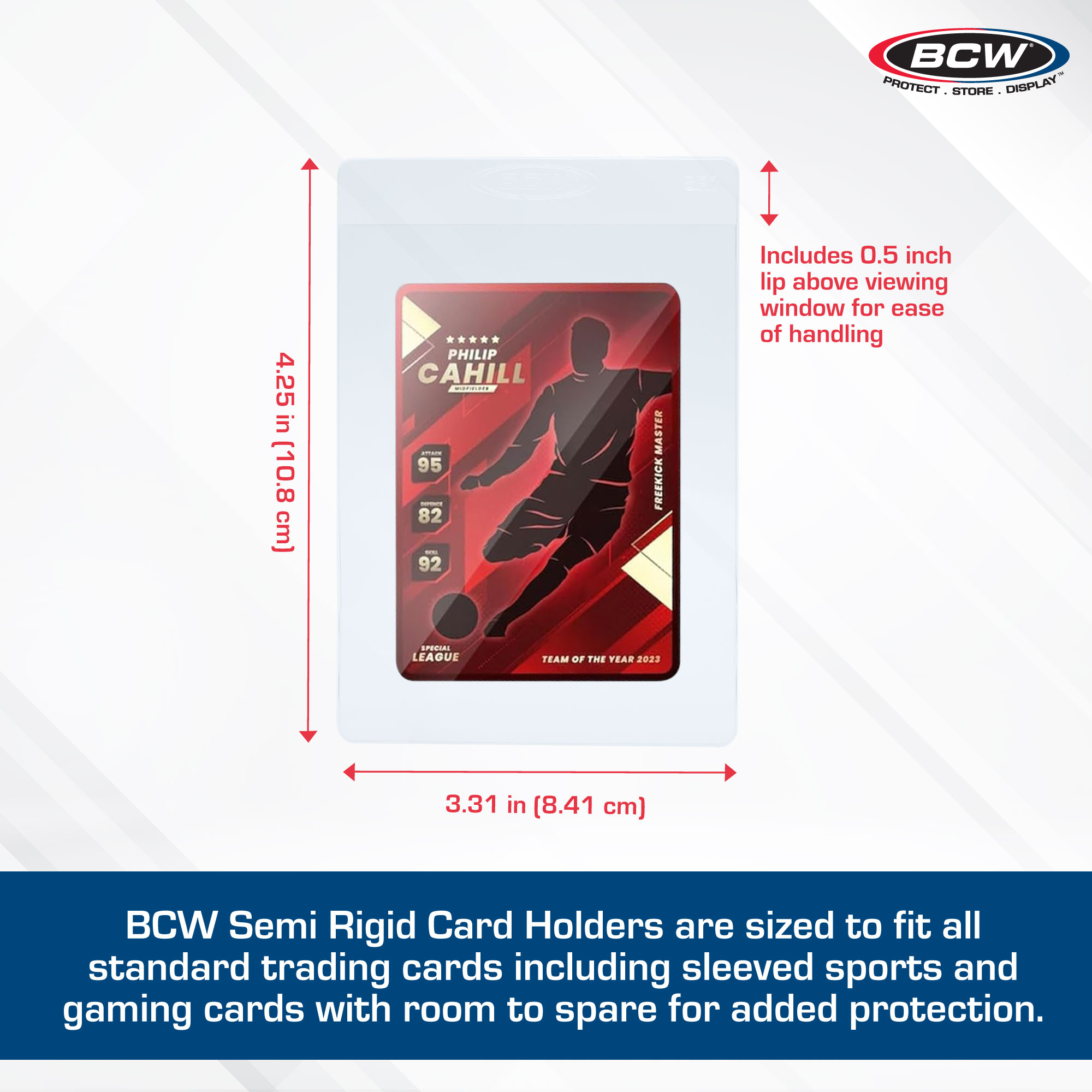
Max Protection, TitanShield, and the Challenger Brands
Past the Big 3, two challenger brands show up in collector rotation often enough to mention.
Max Protection runs a slightly wider opening than standard Ultra Pro or BCW 35pt. The tradeoff is useful: sleeved cards drop in without the tight-fit scratching risk. The downside is paper cards shift more in shipping, which can round soft corners. Max Protection makes sense if you double-sleeve everything (KMC inner plus perfect fit outer) and want a toploader that accommodates that stack. For bare-sleeved base cards, standard 35pt is still the better fit.
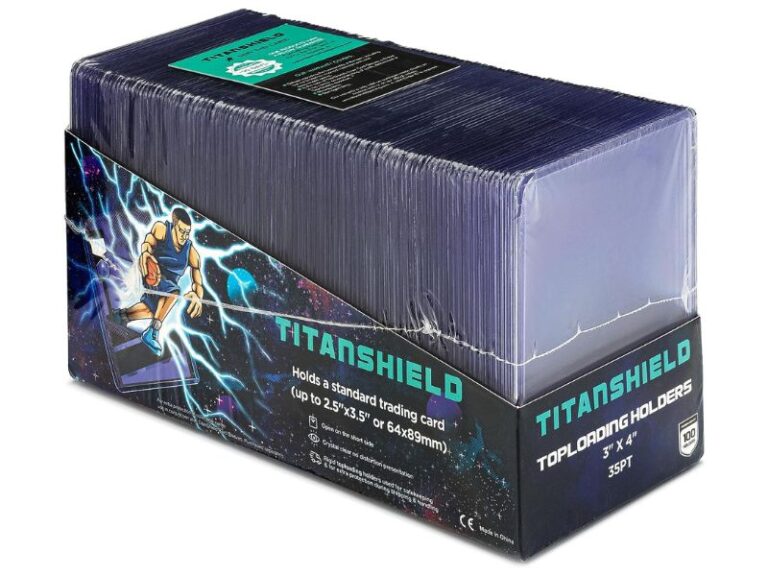
TitanShield is the budget bulk play. 100-count bricks run about $7 to $9, which is cheaper per unit than BCW. Clarity is close to BCW. Edge finish is less consistent, with more reports of lint on the inner surface. For shipping $5 to $15 base sales where the loader gets discarded on arrival, TitanShield is fine. For storage or display, spend the extra few cents on BCW or Ultra Pro.
The rule of thumb collectors on Sports Card Forum repeat: if the card is worth less than $20 and will ship within a week, TitanShield works. If the card is worth more than $50 or stays in storage, it's not the right call.
How Many Do You Actually Need? Cost-Per-Card Math
Pack size matters more than most collectors realize. Here's the real math at three common volumes.
| Pack size | Cardboard Gold 35pt | Ultra Pro 35pt | BCW 35pt | TitanShield 35pt |
|---|---|---|---|---|
| 25-count | $0.35 each | $0.18 each | $0.14 each | $0.12 each |
| 100-count | $0.30 each | $0.13 each | $0.09 each | $0.08 each |
| 1000-count brick | N/A (max 100-ct) | $0.10 each | $0.06 each | $0.05 each |
A few takeaways from the table.
The casual collector rarely needs more than 100. If you buy 2 hobby boxes a year and only toploader the hits, a 25-count pack covers you for two years. Don't overbuy just because a 1,000-count brick has a better unit cost.
Rip-and-ship sellers need 1,000-count bricks. If you ship 100 sales a month, a 100-count pack lasts under a week. The 1,000-count brick drops unit cost 40-50% versus 25-count, which adds up to real money over a year.
Thick loaders only come in smaller packs. 100pt+ loaders max out at 50-count packs for most brands. If you pull a thick patch auto per box, buy in 10-packs and replenish. Hoarding thick loaders ties up cash for cards you may not pull.
What Reddit and the Forums Say
Community sentiment on toploaders has shifted in the last two years. Here's what the specific threads say, attributed.
r/sportscards on Ultra Pro edge drift: multiple threads from late 2024 through 2026 flag Ultra Pro 35pt loaders for rougher inner edges and lint residue on recent production. The consensus is that older Ultra Pro stock is still the clarity gold standard, but new production has slipped. Collectors are switching to BCW or Cardboard Gold for high-value cards on insertion safety.
Blowout Forums on BCW value: long-tenured collectors consistently recommend BCW for bulk and rip-and-ship volume. The common line is that BCW and Ultra Pro are functionally identical at the 35pt tier in 2026, and BCW wins on price per unit. BCW pages (9-pocket binder pages) get more criticism than BCW toploaders, which hold up well.
Collectors Universe on Cardboard Gold: Cardboard Gold has 15+ years of positive threads on the Collectors Universe forums. The repeat framing is “use Cardboard Gold for anything you're grading or shipping cross-country.” Price premium is accepted as worth it on cards $50 and up.
sportscardclub.com on long-term storage: the site's older Ultra Pro loaders from 2010 to 2015 still look factory-fresh per multiple owner reports. That's the clarity benchmark newer loaders need to beat, and most don't hit it yet.
columbiasportscard.com brand rankings: the 2025 LGS ranking puts Cardboard Gold at #1, Max Protection at #2, Ultra Pro at #3, and TitanShield at #4 for budget. It matches the community sentiment on Cardboard Gold as the quality leader and TitanShield as the budget play.
Mistakes to Avoid When Buying Toploaders
Short list. These show up in buyer complaints on every card forum.
- Forcing a sleeved card into a 35pt loader. The loader seam splits or the card corners round on insertion. Size up to 55pt for sleeved Chrome base.
- Buying cheap no-name Amazon loaders. Often PVC-based, which yellows cards within 12 to 18 months. If the product listing doesn't name the plastic type, skip it.
- Using a hard toploader for a PSA submission. Not rejected, but it slows intake and raises handling risk. Use Card Saver I instead.
- Shipping a thick patch auto in a 35pt loader. The card bows, the loader cracks on a drop, and the corners get hit. Match the point count to the card.
- Over-taping the top of a loader. A single strip of painter's tape holds. Packing tape bonds to the plastic and pulls the loader surface when peeled, which can scratch the card on extraction.
- Reusing loaders with visible scratches on the inner surface. The scratches transfer micro-abrasions to the next card. Toploaders are cheap. Retire the ones that look beat up.
Once your cards are loadered, pair them with good storage from our best card storage boxes guide, and consider sleeves from our Pokemon sleeves for grading piece (the sleeve advice applies to sports cards too).
Frequently Asked Questions
What is the best brand of toploader for sports cards?
Cardboard Gold is the best overall for cards worth $50 and up, for grading submissions, and for long-distance shipping. BCW wins on bulk value and is the best default for most collectors in 2026. Ultra Pro still has the cleanest long-term clarity on older stock, with recent production runs showing edge and lint issues that have pushed some collectors to switch.
What thickness toploader do I need for sports cards?
35pt for modern base (Chrome, Prizm, Optic, paper rookies). 55pt for sleeved base or thicker paper stock like 1990s Upper Deck. 75pt for jersey relics, sticker autos, and single-swatch patches. 100pt for thick patch autos (National Treasures, Flawless). 130pt+ for triple relics, booklets, and Topps Dynasty cuts.
Are Ultra Pro or BCW toploaders better?
Ultra Pro has historically had the clearest long-term clarity. BCW has closed the gap in recent years and wins on price per unit by 15 to 25%. Recent Reddit feedback notes Ultra Pro edge drift on 2024-2026 production runs. For bulk or rip-and-ship, BCW is the better pick. For display pieces where legacy clarity matters, Ultra Pro Platinum still edges out.
Do PSA and CGC require a specific toploader for submission?
Both prefer semi-rigid Card Saver I holders, not hard toploaders. The reason is intake workflow: graders flex the semi-rigid holder to pop the card out cleanly, which is lower risk than sliding a card out of a hard toploader. Hard toploaders don't get your submission rejected, but they slow intake and raise handling risk. Use Card Saver I for the actual submission.
Are Cardboard Gold toploaders worth the price?
Yes for cards worth $50 and up, for any card going to PSA or CGC, and for long-distance shipping on valuable sales. The price premium runs about 2-3x BCW, which is cheap insurance on a card you care about. For bulk commons, shipping $5 to $15 sales, and storage of lower-value cards, BCW or Ultra Pro is the right spend.
How many toploaders do I need per 100 cards?
Most collectors don't loader every card. The standard hobby practice is to penny-sleeve everything and only toploader the top 5 to 10% of a collection (chase hits, rookies, autos). For 100 cards, that's 5 to 10 loaders. For a rip-and-ship seller moving 100 sales a month, the math flips to 1:1 since every outgoing card ships in a toploader.
Can I reuse toploaders?
Yes, if the inner surface isn't scratched and the seams aren't stressed. Check the corners before reusing on a valuable card. Loaders that came on a cheap eBay buy are often abused and worth retiring. A $0.08 BCW loader isn't the place to save money on a $200 card.