
PSA grading can turn a $45 card into a $280 card, or it can burn $40 on a card that comes back as a PSA 8 worth less than you paid to submit it. Collectors on r/pokemontcg and r/sportscards ask the same question every week: is it worth it? The answer depends on three numbers: your card's raw value, the expected grade, and the total cost of submission. This guide breaks down those numbers with real eBay sold data so you can make the call yourself.
The Short Answer: When PSA Grading Pays Off (and When It Doesn't)
PSA grading pays off when the graded premium exceeds your total costs by at least 2x. A card worth $45 raw that grades PSA 10 at $280 clears that bar. A card worth $15 raw that grades PSA 10 at $45 does not, because the $40 in grading and shipping costs leave you with almost nothing.
The $50 raw-value threshold shows up in collector discussions across Reddit and Elite Fourum threads. Cards below $50 raw need a PSA 10 pop rate high enough to justify the gamble, and most modern cards don't have that. Collectors who grade $10 to $30 cards in bulk often lose money after accounting for the cards that come back as PSA 9 or lower.
One formula cuts through the noise:
(Expected Graded Price - Raw Price - Total Grading Cost) / Total Grading Cost = ROI
If that number is below 1.0 (100% ROI), you're taking a bad bet. If it's above 2.0, grading makes financial sense. Between 1.0 and 2.0 is a gray zone where personal collection value might tip the scales.
PSA Grading Costs in 2026: Every Fee You'll Pay
PSA raised prices in February 2026, and the new tiers make budget grading harder for cards under $50. The table below shows what each service level costs as of April 2026.
| Service Level | Price Per Card | Turnaround | Min. Cards | Notes |
|---|---|---|---|---|
| Value Bulk | $24.99 | 65 business days | 20 | PSA Collectors Club required ($99/yr) |
| Regular | $79.99 | 30 business days | 1 | No membership needed |
| Express | $199.99 | 10 business days | 1 | Best for cards worth $1,000+ |
| Super Express | $399.99 | 5 business days | 1 | Declared value up to $4,999 |
| Walk-Through | $599.99 | 1-2 business days | 1 | In-person drop-off at PSA HQ |
Those per-card prices miss several hidden costs. Collectors need to factor in costs that PSA doesn't put in bold:
- PSA Collectors Club membership: $99 per year, required for the $24.99 Value Bulk tier. You need to grade about 7 cards per year at bulk rates to break even on the membership versus paying $79.99 per card at Regular
- Shipping to PSA: $15 to $25 depending on insurance and tracking. USPS Priority Mail with $500 insurance runs about $18
- Return shipping: PSA charges $12 to $20 for return shipping depending on declared value and insurance level
- Upcharge on declared value: Cards declared above $499 incur a surcharge of 2% of declared value. A card you declare at $1,000 adds $20 to the grading fee
- Insurance: Optional but recommended. A lost or damaged card during transit isn't covered by PSA's standard service
Total cost per card at the Value Bulk tier: about $40 to $45 when you factor in membership (amortized), shipping both ways, and insurance. At the Regular tier, total cost runs $100 to $110 per card.
Raw vs Graded: What the Sold Data Shows
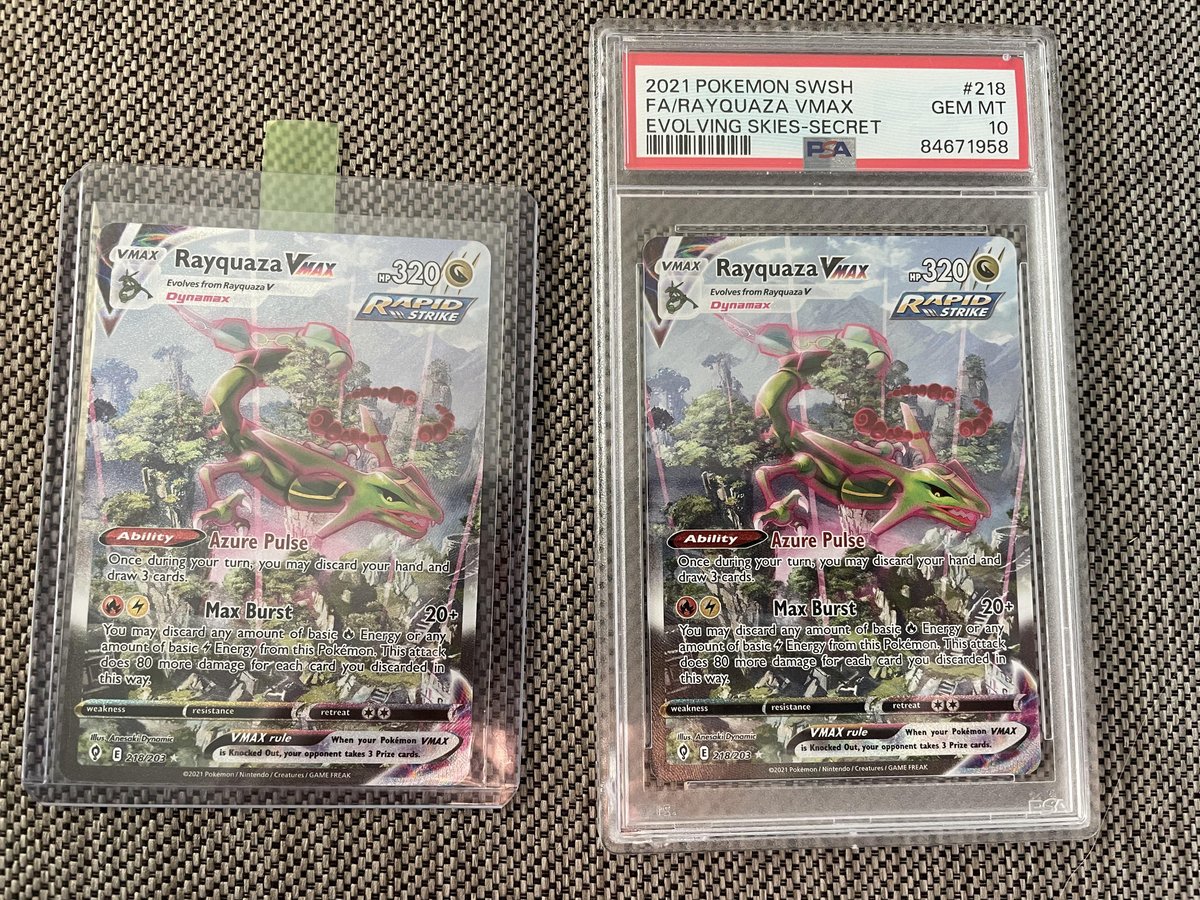 A raw Rayquaza VMAX next to the same card in a PSA 10 slab. Collectors pay a premium for the verified grade and protective case. Photo credit: r/PokemonTCG
You can see the gap between raw and graded prices in real eBay sold listings. The table below pulls data for four cards across different categories: a modern Pokemon chase card, a vintage Pokemon card, a sports rookie card, and a lower-value modern card.
| Card | Raw Price | PSA 9 Price | PSA 10 Price | Grading Cost | PSA 10 ROI |
|---|---|---|---|---|---|
| Charizard ex 199 (Pokemon 151) | $45 | $80 | $280 | $25 + $15 shipping | +$195 (490%) |
| Base Set Charizard (Unlimited) | $220 | $650 | $3,800 | $25 + $15 shipping | +$3,540 (1,475%) |
| Cooper Flagg RC (2025 Topps S1) | $35 | $55 | $180 | $25 + $15 shipping | +$105 (263%) |
| Pikachu VMAX (Vivid Voltage) | $15 | $22 | $45 | $25 + $15 shipping | +$5 (13%) |
You can spot the pattern fast. Collectors who grade high-value cards with strong PSA 10 premiums come out ahead. You'd earn 1,475% ROI on the Base Set Charizard at PSA 10 because the raw-to-graded gap is massive. The Charizard ex 199 from Pokemon 151 returns 490%, which is strong.
Look at the Pikachu VMAX for the other side. At $15 raw, a PSA 10 sells for $45. After $40 in total costs, you net $5 profit. That's a 13% return, and it assumes you get the PSA 10. If the card comes back as a PSA 9, it sells for $22, and you've lost $18 on the submission.
Collectors on r/psa say it plain: "If you're grading sub-$50 cards for profit, you're subsidizing PSA's business model."
Modern Cards: The PSA 10-or-Bust Problem
Collectors grading modern cards printed after 2020 walk into a trap. Print quality is high enough that PSA 9 premiums on modern cards are tiny. A PSA 9 modern card often sells for 10% to 30% more than raw, which rarely covers grading costs. A PSA 10 sells for 3x to 10x raw, but pop reports show most modern cards grade at PSA 9 or lower.
Take Pokemon Prismatic Evolutions SARs as an example. Centering on these cards runs off from the factory, and collectors on r/PokeGrading report PSA 10 rates below 30% for cards they considered pack-fresh. That means 7 out of 10 submissions come back as PSA 9 or lower, where the graded premium doesn't cover the submission fee.
The math works for modern cards only when:
- The raw card sells for $50 or more
- You've inspected centering and surface under good lighting and believe PSA 10 is likely
- The PSA 10 premium is at least 3x the raw price
Collectors who treat modern grading as a numbers game, submitting 20 cards hoping for a few PSA 10s, need 30%+ of their cards to hit PSA 10 to break even. That's possible with careful pre-screening, but most collectors overestimate their cards' condition.
Vintage Cards: Lower Grades Still Print Money
Cards printed before 2010 follow different economics. A PSA 7 or PSA 8 vintage card can sell for 2x to 5x the raw price because buyers pay for authentication as much as the grade. A raw Base Set Charizard carries questions about authenticity and condition. A PSA 8 Base Set Charizard removes that uncertainty, and buyers pay a premium for it.
The grading math for vintage cards:
- PSA 10: Unicorn territory. Most vintage cards don't exist in PSA 10, so the few that grade 10 command massive premiums (10x to 50x raw)
- PSA 8-9: The sweet spot. Vintage cards in this range sell for 2x to 5x raw, and the grading fee pays for itself on cards worth $100+ raw
- PSA 5-7: Authentication value carries the investment. Buyers trust a PSA 5 vintage card more than an ungraded card with visible wear
For vintage cards worth $100 or more raw, grading almost always makes sense. Buyers trust a graded vintage card more than a raw one, and that trust alone covers the grading fee. Sellers move PSA-graded vintage cards faster on eBay and get higher final bids.
The PSA Scandal: What Collectors Need to Know Before Submitting
In December 2025, collectors discovered that PSA had been buying back PSA 9 cards at market price, then re-slabbing them as PSA 10 for resale at 3x to 10x the purchase price. Athlon Sports and other outlets covered the story, and @Tony_Denaro on X broke several of the initial findings.
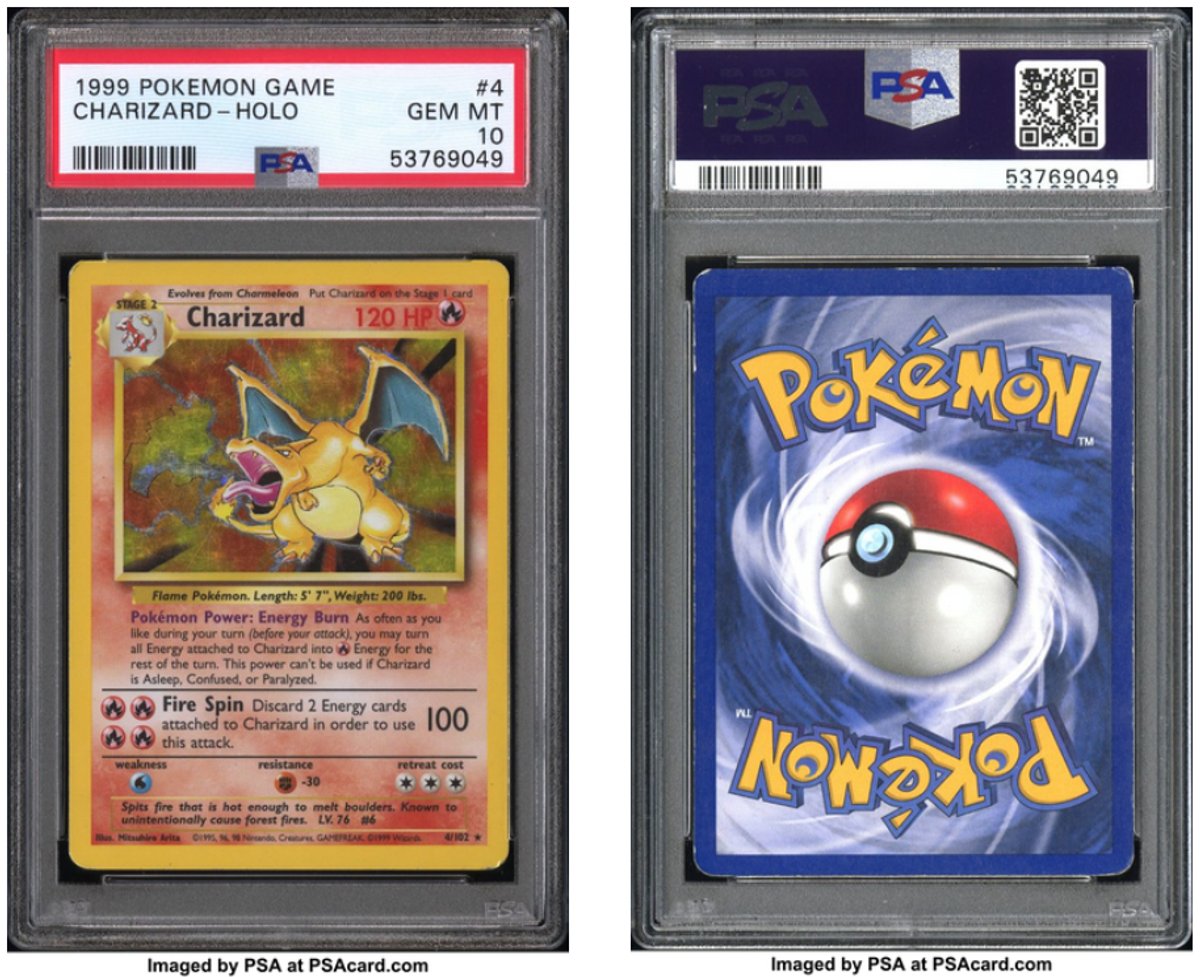 A Base Set Charizard graded PSA 10 "Gem Mint" that collectors questioned for visible wear. Posts like this fuel the debate about PSA grading consistency. Photo credit: r/PokemonTCG
The scandal raised three concerns for collectors:
- Grade consistency: If PSA can upgrade a 9 to a 10 on a second pass, what does the grade mean? Collectors on r/psa shared stories of resubmitting the same card and getting different grades, which the scandal made harder to dismiss
- Market trust: PSA-graded cards saw 10% to 20% price drops in the weeks after the story broke, according to eBay sold data. Buyers returned to paying pre-scandal prices, but collectors saw the premium gap between PSA and competitors shrink
- Antitrust concerns: Congressman Pat Ryan called for a federal antitrust probe into Collectors Holdings (PSA's parent company), which also owns SGC and Beckett. The probe focuses on whether controlling roughly 80% of the grading market creates anticompetitive behavior
Some dealers have boycotted PSA and shifted submissions to CGC. @DannypTCG on X documented moving his entire operation away from PSA in January 2026.
Sellers still get the highest resale premiums from PSA slabs on eBay. That market reality hasn't changed. But collectors now have a reason to consider CGC or BGS, especially for Pokemon cards where CGC's market share is growing.
PSA vs CGC vs BGS: Which Grader Is Worth It in 2026?
The grading market has shifted since the PSA scandal. CGC has gained ground in Pokemon, and BGS remains strong in sports cards. The table below compares the three graders on the factors that affect your wallet.
| Feature | PSA | CGC | BGS |
|---|---|---|---|
| Base Price | $24.99 (bulk) | $15 (bulk) | $20 (bulk) |
| Premium on Resale | Highest | Growing (Pokemon) | Strong (sports) |
| Turnaround (bulk) | 65 business days | 50 business days | 60 business days |
| Sub-grades | No | No | Yes (4 categories) |
| Membership Required | Yes ($99/yr for bulk) | No | No |
| Trust After 2025 | Damaged by scandal | Gaining ground | Stable |
PSA still commands the highest resale premium across categories. On eBay, a PSA 10 sells for 10% to 30% more than a CGC 10 or BGS 10 for the same card. Buyers still pay that premium, though it's shrinking. Collectors who grade for resale still get the best return from PSA.
CGC is the rising option for Pokemon collectors. CGC doesn't require a membership for bulk submissions, their turnaround is faster, and trust in the brand grew after the PSA scandal. Several dealers on r/pokemontcg now recommend CGC for first-time graders. Submit to CGC affiliate
BGS (Beckett Grading Services) appeals to sports card collectors who value sub-grades. BGS breaks the grade into four categories: centering, edges, surface, and corners. A BGS 9.5 with all four sub-grades at 9.5 or higher (called a "Quad 9.5") commands a premium close to a PSA 10 in sports cards.
For most collectors in 2026, PSA remains the default choice for resale value. CGC makes sense if you collect Pokemon and want lower costs or lost faith in PSA. BGS works for sports collectors who care about sub-grade detail.
The GameStop Drop-Off Option: Cheaper but Riskier
GameStop partnered with PSA to offer in-store card drop-off at reduced rates: $15.99 per TCG card and $19.99 per non-TCG card. These prices undercut PSA's direct Value Bulk tier ($24.99) and don't require a Collectors Club membership.
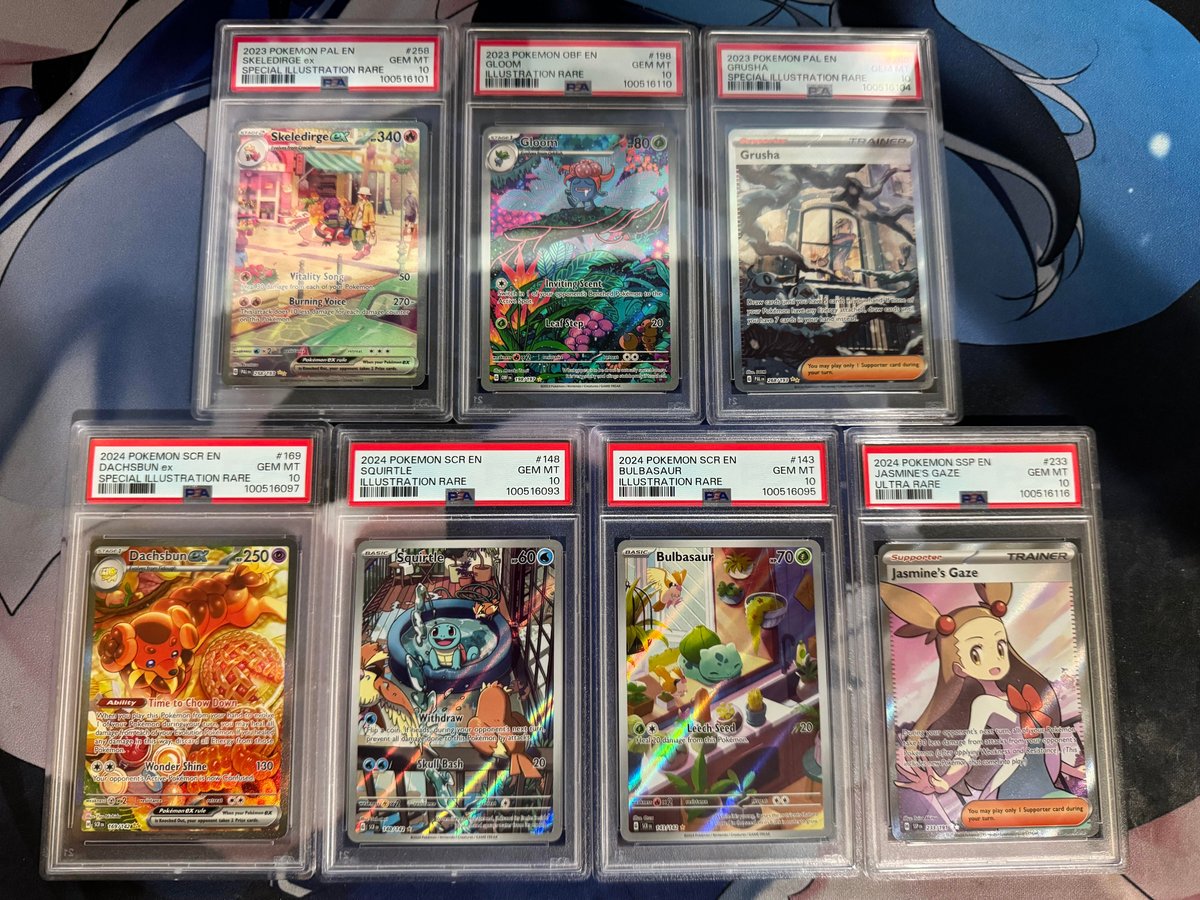 A collector's GameStop PSA submission returned: seven slabs graded and ready for pickup. GameStop batches submissions and ships to PSA on a rolling basis. Photo credit: r/PokemonTCG
The savings come with trade-offs:
- No insurance during FedEx transit: GameStop ships cards to PSA via FedEx, and the standard service doesn't include insurance for individual cards. If FedEx loses or damages the package, neither GameStop nor PSA covers the loss
- Longer turnaround: GameStop batches submissions and ships weekly or biweekly. Add that transit time to PSA's 65-business-day turnaround, and total wait can stretch past 4 months
- Limited card value: Collectors on r/psa recommend GameStop drop-off only for cards worth under $200 raw. The insurance gap makes it risky for high-value cards
GameStop drop-off works well for casual collectors grading 5 to 10 cards under $200 each. You save $10 to $15 per card versus direct PSA submission, and you don't need to handle packaging and shipping yourself. For cards worth more than $200, submit to PSA through their website where you control the insurance and shipping.
A Decision Framework: Should You Grade This Card?
Before you pay for a submission, run through these four steps. They take less than five minutes and can save you from a bad grading investment.
The collectors who profit from grading follow a consistent pattern: they grade fewer cards, screen harder, and only submit when the math works. Collectors on r/pokemontcg call it "grade less, grade better."
View PSA Submission Pricing affiliateHow to Self-Grade Before You Submit
Grading companies evaluate four attributes: centering, surface, edges, and corners. You can check all four at home with a bright light and a $9 jeweler's loupe. Spending five minutes on this check prevents you from wasting $40 on a card that's going to come back below PSA 9.
If your card passes all four checks, you have a reasonable shot at PSA 9 or 10. If it fails any single check, expect PSA 8 or lower on modern cards. For vintage cards, the threshold is more forgiving because buyers expect wear.
You can check current graded values for Pokemon cards or browse sports card prices on PullRate before deciding whether a card's graded premium justifies the submission.
PSA grading is still worth it in 2026, but only if you treat it like surgery, not a lottery ticket. The February price hike to $24.99 bulk killed the math on anything under $75 raw. At $40 to $45 all-in per card, you need a PSA 10 selling for $120 or more just to clear a reasonable profit after accounting for the cards that come back as 9s. Most collectors aren't running those numbers. They're submitting 20 cards, getting four 10s, and calling it a win without adding up the losses on the other sixteen.
The buyback scandal made the trust problem worse, but it didn't change the market reality. PSA 10s still outsell CGC 10s by 5% to 15% on eBay for modern Pokemon. That gap is shrinking, and CGC's growth (up 156% year over year in grading volume) tells you where momentum is heading. But momentum isn't money today. If you're grading to sell within the next six months, PSA still gets you the highest final bid. If you're grading for your personal collection and the wait doesn't bother you, CGC at $15 per card is the smarter play.
PullRate's position: grade five cards you're confident in, not twenty you're hoping on. Run the ROI formula before every submission. If the card isn't worth at least $75 raw with a realistic shot at a 10, keep it in a toploader and save your money. The collectors who profit from grading aren't the ones with the biggest orders. They're the ones with the highest hit rates.
“As someone who does a bulk submission once a month, I'm officially priced out. I used to pad my submissions with a lot of cheaper cards to resell and recoup the grading costs. Now at $25 a card plus shipping and insurance, you're looking at $26-$28 a card.”
— r/psagrading“It took us 6 months of consistent PSA submissions before we were happy with our results. To be completely transparent, we lost money during this time. Overestimating your Gem Probability will lead to losses.”
— r/psagrading — grading business breakdown“14 cards I sent over and only 3 got a 10, most were 9 and I got 2 8s and a 7 Charizard UPC which is fresh from the box. PSA is certainly grading stricter.”
— r/PokeGrading“I typically start evaluating by looking at centering issues, corner or edge whitening — and eliminate cards from there. Then I bust out the loupe and light to check for smaller imperfections. My last order I got 25/27 grades right.”
— r/sportscards“PSA is grading cards as PSA 9's, offering high buyout values, and then flipping the same certs to PSA 10's for them to sell. This conflict of interest and corporate greed truly knows no bounds.”
— r/PokeGrading — PSA fraud alert thread (502 upvotes)“This will make me more selective about sending in cards. Before I was sending everything in, but now if the PSA 10 doesn't increase value to at least $100 I won't send it.”
— r/psagrading — Feb 2026 price increase threadFrequently Asked Questions
How much does PSA grading cost per card in 2026?
PSA's Value Bulk tier costs $24.99 per card with a 20-card minimum and a PSA Collectors Club membership ($99 per year). The Regular tier costs $79.99 per card with no minimum. Add $15 to $25 for shipping to PSA and $12 to $20 for return shipping. Total cost per card at bulk rates runs about $40 to $45, and about $100 to $110 at Regular.
Is PSA grading worth it for cheap cards?
Cards under $50 raw rarely generate enough graded premium to cover the $40 to $45 total cost at bulk rates. A $15 card that grades PSA 10 at $45 nets you $5 or less after fees, and it probably won't grade PSA 10. The exception is sentimental cards you want in a protective slab for display, where the cost is about protection, not profit.
Does PSA grading increase card value?
PSA 10 can add 3x to 10x the raw price for modern cards. PSA 8 and above adds 2x to 5x for vintage cards. PSA 7 and below on modern cards can decrease perceived value compared to raw, since a low grade confirms the card has flaws that buyers might have overlooked when buying raw.
Is PSA still trustworthy after the 2025 scandal?
PSA denied fraud, but the buyback grade-flip raised legitimate concerns about grade consistency. PSA slabs still command the highest market premiums on eBay, and most dealers still accept PSA as the standard. Collectors who lost confidence have options in CGC (growing in Pokemon) and BGS (strong in sports). PSA kept its market position, but competitors gained an opening they didn't have before.
How long does PSA grading take in 2026?
Value Bulk takes 65 business days after PSA receives your cards. Add 3 to 4 weeks for receiving and intake processing. Regular takes 30 business days. Express takes 10 business days. GameStop drop-off adds transit time on top. Total wait at the Value Bulk tier often exceeds 4 months from ship date to slab in hand.
Is it better to sell cards raw or graded?
High-value cards in excellent condition sell better graded. The PSA slab adds buyer confidence and a verified grade, which increases final auction prices. Common cards, cards with visible flaws, or cards under $50 raw sell better ungraded. A PSA 7 on a modern card can hurt resale because it confirms condition issues that raw buyers might not have noticed.
Should I grade Pokemon cards or sports cards with PSA?
Both categories can be profitable with PSA. Pokemon PSA 10s command large premiums on chase cards from sets like Prismatic Evolutions and Pokemon 151. Sports cards benefit from PSA authentication on rookie cards, where buyers want proof of condition and authenticity. CGC is gaining ground in Pokemon; BGS and SGC have footholds in sports.