
Counterfeit Pokemon cards cost collectors real money every week. Bitdefender tracked 477 Pokemon card scam cases in late 2025, with losses topping $958,000. On Reddit, collectors report losing $50 to $100 on fake cards from Facebook Marketplace and Instagram sellers. A counterfeit Charizard ex SAR someone paid $80 for has zero resale value, while the real card sells for $350 or more. Eight tests can protect you from that kind of loss, and you can do all of them at home with under $40 in tools.
Why Fake Pokemon Cards Cost Collectors Real Money
The counterfeit Pokemon card market has grown alongside the hobby's boom. Collectors who skip authentication risk buying cards worth nothing at market prices. A fake Umbreon VMAX alt art purchased for $150 is worth $0. The seller keeps the money, and the buyer owns a piece of printed cardboard with no collectible or tournament value.
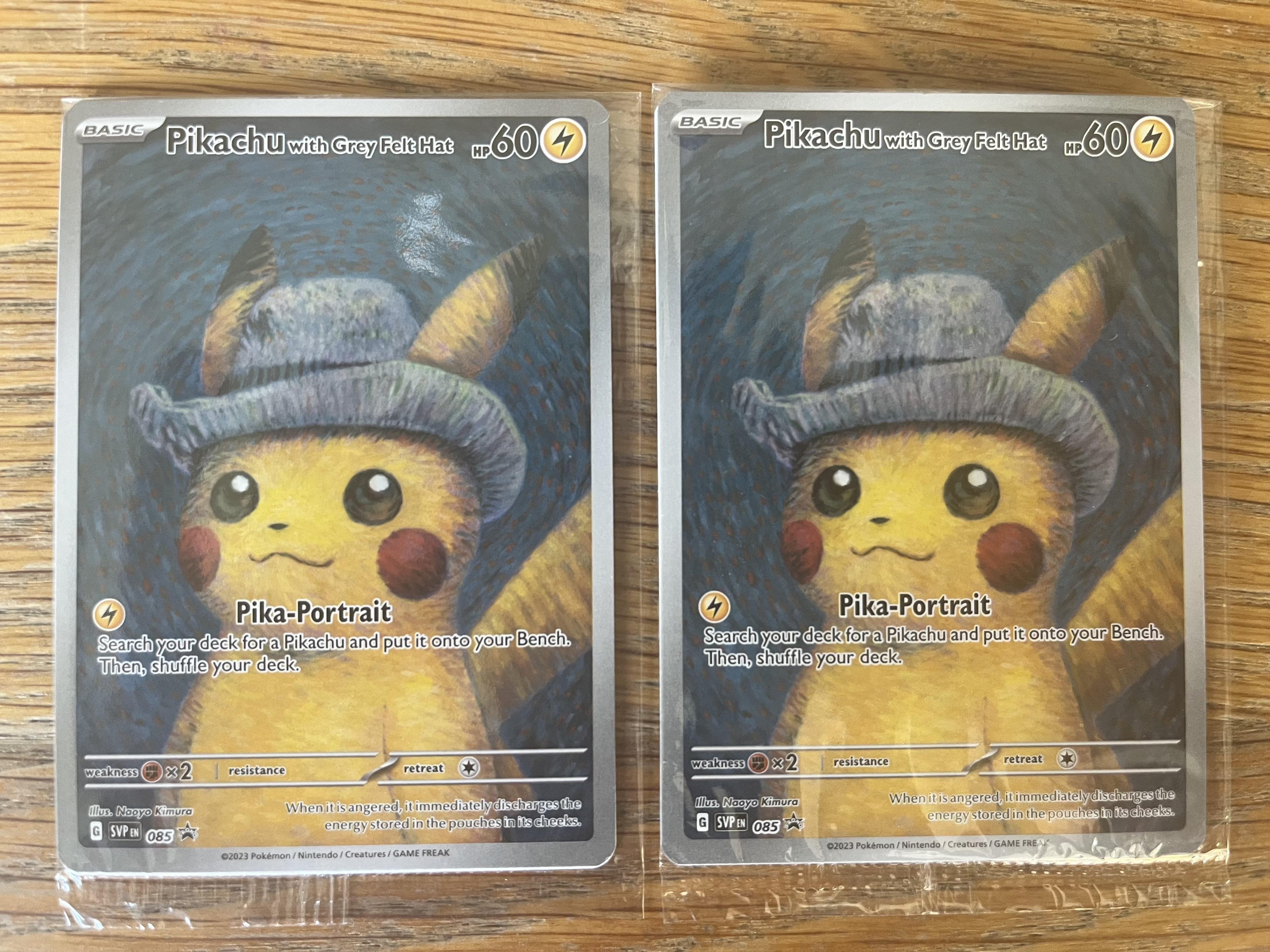 Two Pikachu with Grey Felt Hat promos side by side. One cost €230 online, the other was handed out for free at a card shop. Can you tell which is which? Photo credit: u/Koeeb on r/PokemonTCG
Super fakes, the newest generation of counterfeits, have made this problem worse in 2025 and 2026. These fakes pass casual inspection and sometimes clear the light test that collectors once treated as a reliable catch-all. Reddit threads on r/pokemontcg show more "received a fake slab" reports in early 2026, with Prismatic Evolutions SARs and illustration rares as top targets.
No single test catches every fake. Collectors who combine three or more tests catch even the best super fakes, according to community feedback across r/pokemontcg and r/PokemonCardValue. The eight tests below move from fastest to most thorough, so you can screen cards in 30 seconds or run the full battery in under 5 minutes.
| Test | Catches Basic Fakes | Catches Super Fakes | Tools Needed | Time |
|---|---|---|---|---|
| Light Test | Yes | Sometimes | Phone flashlight | 5 sec |
| Texture Test | Yes | Yes | None (fingernail) | 10 sec |
| Weight Test | Yes | Yes | Digital scale ($13) | 10 sec |
| Print Quality Test | Yes | Yes | Jeweler's loupe ($9) | 30 sec |
| Card Back Test | Yes | No | Known real card | 10 sec |
| Spelling/Details Test | Yes | No | Set checklist | 30 sec |
| Bend Test | Yes | Sometimes | None | 5 sec |
| UV Blacklight Test | Yes | Yes | UV flashlight ($10) | 10 sec |
The Light Test
The light test takes five seconds and catches most basic counterfeits. Hold a phone flashlight behind the card. Real Pokemon cards have a black core layer sandwiched between the front and back cardstock. This core blocks most light, so you'll see a dim, even glow at most.
Fake cards light up bright. You can often see the artwork through them because the card stock lacks that black core layer. The difference is obvious when you hold a known real card next to a suspected fake under the same flashlight.
The caveat: Super fakes from 2025 and 2026 have improved their card stock to sometimes pass this test. Reddit collectors on r/pokemontcg now warn against relying on the light test alone. Treat it as a fast first screen, not a final verdict. If a card passes the light test, keep going through the rest of the checks.
The Texture Test
Reddit collectors rank the texture test as the most reliable single check for spotting fakes. Run a fingernail across the card surface. Real Pokemon cards have a physical etched texture, fine grooves you can feel and hear as your nail drags across them. The texture feels similar to running your finger across a vinyl record.
Fake cards feel smooth, glossy, or waxy. Some counterfeits try to replicate the texture with a printed pattern, but the pattern sits on top of a flat surface rather than being pressed into the card stock itself. Your fingernail won't catch on anything.
For holofoil and full-art cards, examine how the holo shifts when you tilt the card. Real holofoil has depth and changes angle as you move it. Fake holo looks flat or printed on, like a sticker placed over the artwork.
This test catches most super fakes that manage to pass the light test. Counterfeiters have gotten better at matching card thickness and opacity, but replicating the physical texture of offset-printed, pressed card stock remains difficult and expensive at scale.
The Weight and Thickness Test
A digital scale removes guesswork from authentication. Real Pokemon cards weigh 1.7 to 1.8 grams and measure 0.31 to 0.32mm thick. Fakes fall outside these ranges because counterfeiters use different paper stock.
You can pick up a pocket digital scale accurate to 0.01 grams for about $13 on Amazon. That scale pays for itself the first time you catch a fake.
Weighing cards works well for batch-checking marketplace purchases. If you bought a lot of 20 singles from eBay or TCGPlayer, weigh each one. Any card that lands outside the 1.7 to 1.8 gram range deserves a closer look with the remaining tests. Cards from different eras can vary by a fraction of a gram, but fakes tend to miss by 0.2 grams or more.
The Print Quality Test
A 10x jeweler's loupe or phone macro lens reveals the printing method behind a card. Real Pokemon cards use offset printing, which creates a characteristic rosette dot pattern when magnified. The dots arrange themselves in small, overlapping circles of cyan, magenta, yellow, and black.
Fake cards show different patterns under magnification:
- Inkjet fakes have visible straight lines instead of rosettes
- Laser-printed fakes show blurred, uneven dots with toner spots
- High-quality fakes may have dots, but the rosette pattern looks irregular or misaligned
Check the energy symbols on the card. Energy symbols are a common weak point on counterfeits because they require precise color registration. Blurry energy symbols or symbols with visible color fringing almost always indicate a fake.
Text sharpness matters too. Zoom in on the attack names and HP numbers. Real cards have crisp, clean text edges. Fakes often show fuzzy text on smaller font sizes like the illustrator credit and collector number.
The Card Back Test
Flip the card over and compare the back against a known real card. The blue dappled pattern around the Pokeball catches about 80% of fakes, according to Wargamer's authentication guide.
Common back-side failures on counterfeits:
- The blue shade runs too dark, too purple, or too flat
- The Pokeball lacks clean white highlights
- The overall pattern appears muddy or low-contrast
- The card back color doesn't match other cards from the same era
Place the suspected card next to a card you know is real. View them under the same light. Differences in the blue shade become obvious in a side-by-side comparison, even without magnification.
The Spelling and Details Test
Counterfeiters make mistakes that legitimate printers don't. Check for these red flags:
- Missing accent mark: The official name uses an accented e in Pokemon. Many fakes drop it
- Misspelled attack names: Compare against the Surging Sparks set list or another PullRate checklist for the correct card text
- Wrong HP values: Modern Pokemon cards top out around 340 HP. Anything over 400 HP is suspicious. Cards showing 5,000 HP are always fake
- Wrong set symbol or collector number: Cross-reference with PullRate's set checklists or the official Pokemon card database
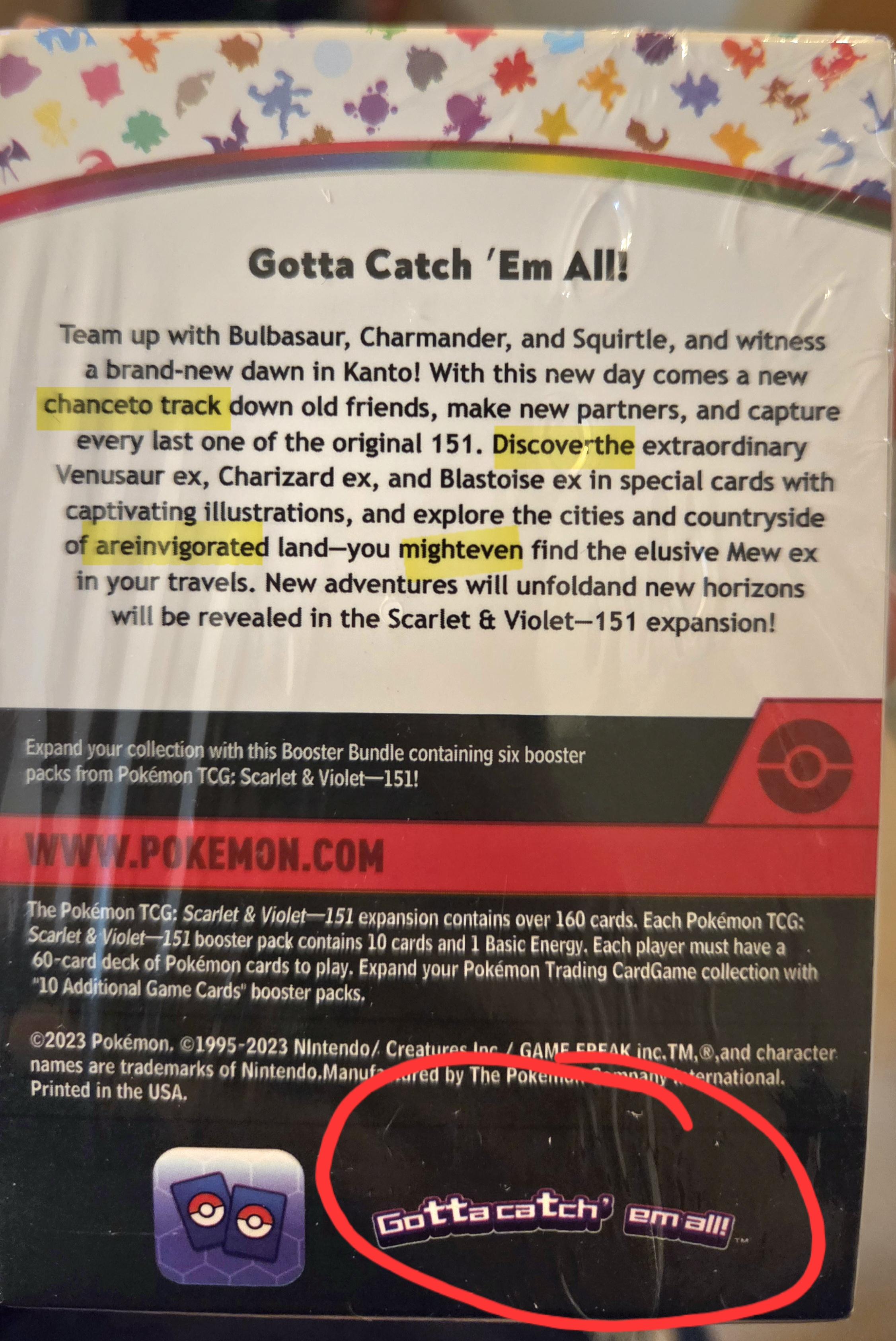 Spelling errors on a fake 151 booster bundle: "chanceto," "areinvigorated," "mighteven," and "unfoldand." The errors are subtle enough to miss at first glance. Photo credit: u/JP3_luv on r/PokemonTCG
These errors appear on cheaper fakes and bulk counterfeit lots. Super fakes tend to copy text without errors, so passing the spelling test alone doesn't confirm a card is real.
The Bend Test (Non-Destructive)
Flex the card with light, even pressure across its width. Real Pokemon cards have spring in the card stock and return to flat when released. The black core layer gives the card a specific rigidity and snap-back.
Fake cards don't respond the same way. Some stay bent, showing a visible crease. Others feel rigid and plasticky, more like a laminated photo than a trading card. The flex-and-return behavior of real card stock is hard to replicate.
This is NOT the rip test. Never tear a card to check authenticity. Reddit collectors on r/pokemontcg and r/PokemonCardValue warn against the rip test in every authentication thread. The rip test destroys the card, and the light test reveals the same black core layer without any damage. Tearing a card to prove it's real is like breaking a phone to test if it's waterproof.
The UV Blacklight Test
The UV blacklight test catches super fakes that pass every other check. Under UV light (365nm wavelength), real Pokemon cards show a specific fluorescence pattern determined by the paper and ink chemistry used in authorized printing facilities.
Fakes glow wrong because counterfeiters use different paper stock, different inks, and different printing processes. Even super fakes that match the weight, texture, and print quality of a real card will fluoresce wrong under UV light.
A UV blacklight flashlight costs $8 to $12 on Amazon. Collectors on Reddit and X now recommend UV lights as a must-have tool because super fakes have improved past basic tests. This single purchase helps you catch fakes that would otherwise slip through every visual and tactile check.
Test your UV light against a known real card first to establish what the correct fluorescence looks like. Different card eras can fluoresce in different ways, so compare against a card from the same set when possible.
What to Do After You Confirm a Card Is Real
Once you've confirmed a card is authentic, protect your investment:
Check the card's current value. You can check current Pokemon card prices on PullRate to see recent sold prices across grades. Knowing the card's market value helps you decide how much protection it deserves.
Sleeve the card. Place it in an acid-free penny sleeve at minimum. For cards worth $20 or more, use a premium sleeve like Dragon Shield Matte. Read our guide to the best sleeves for protecting Pokemon cards or our binder sleeve recommendations for storage options.
Consider grading for high-value cards. If the card is worth $200 or more in raw condition, professional grading through PSA or CGC can increase its value and provide a tamper-evident case that future buyers trust. Grading also serves as professional authentication, giving you and future owners confidence in the card's legitimacy.
Where to Buy Pokemon Cards Safely
Where you buy matters as much as what you buy. Each marketplace carries different risks:
| Marketplace | Buyer Protection | Fake Risk | Best For |
|---|---|---|---|
| TCGPlayer | Full refund on counterfeits | Low | Singles from verified sellers |
| eBay | Money-back guarantee | Medium | Graded cards, sealed product |
| Local Card Shop | Inspect before buying | Low | Singles, building relationships |
| Big Box Retail | Store return policy | Very Low | Sealed product only |
| Facebook Marketplace | Limited | High | Avoid for singles |
| Instagram Sellers | None | Very High | Avoid unless verified |
TCGPlayer has the strongest buyer protection for singles. Reddit collectors praise TCGPlayer's refund policy for counterfeit purchases. Verified sellers on TCGPlayer go through a vetting process, and the platform holds funds until the buyer confirms the order.
eBay offers a money-back guarantee on counterfeits, and its authentication program covers cards sold above certain price thresholds. Use eBay for graded cards and sealed product, where the authentication guarantee adds a layer of protection.
Local card shops let you inspect cards before buying. You can run the texture and visual tests in person, which eliminates most counterfeit risk. Building a relationship with a trusted local shop gives you a reliable source for singles.
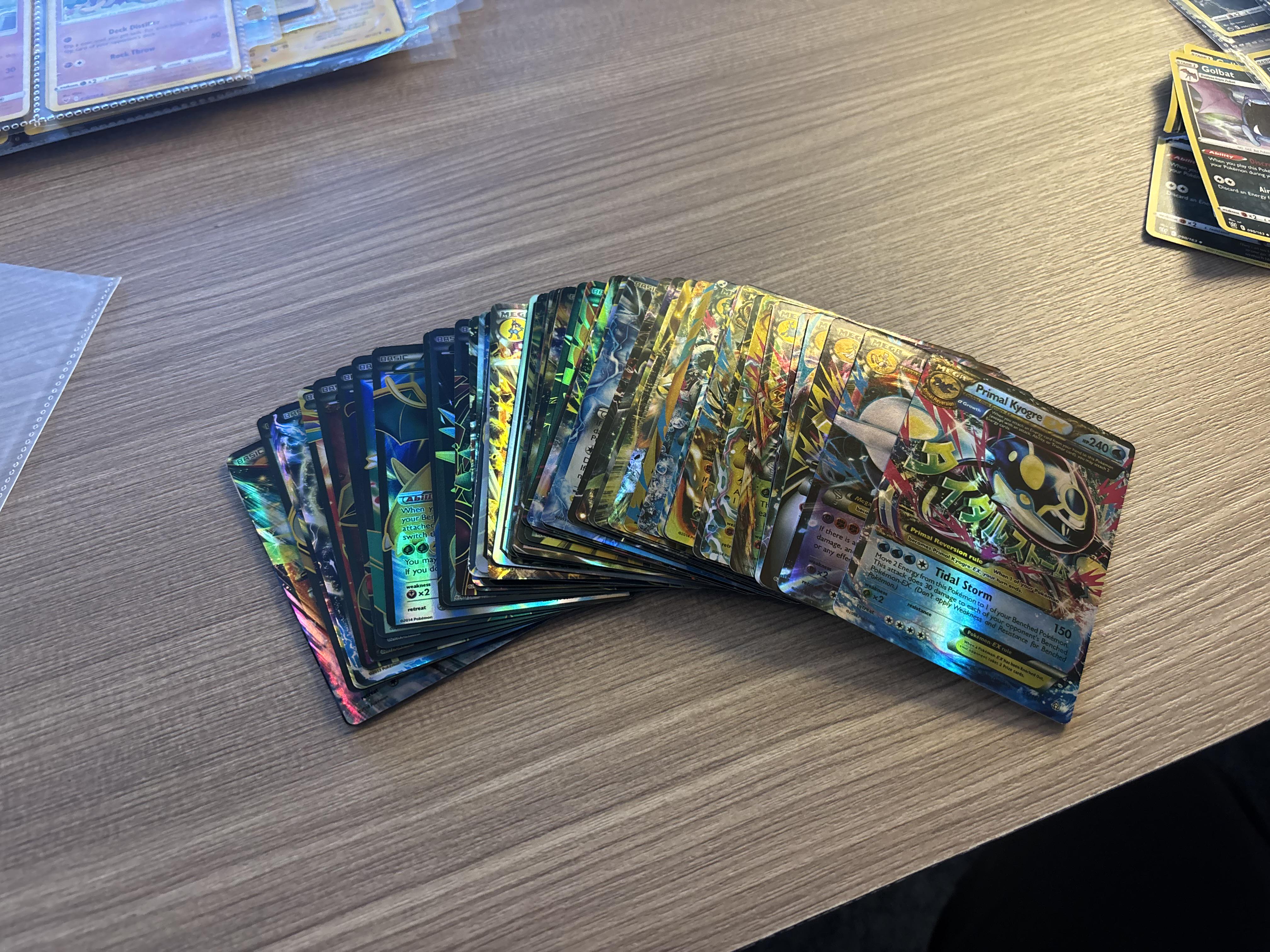 About 40% of the cards in this $50 Facebook Marketplace "mystery box" turned out to be fake. The buyer salvaged $200 in real cards but the fake GX and EX cards were worthless. Photo credit: u/metaldrummerx on r/PokemonTCG
Avoid Facebook Marketplace and unverified Instagram sellers for high-value singles. Reddit collectors on r/pokemontcg report that Facebook Marketplace and Instagram account for most of the fake card scams they encounter. These platforms offer limited buyer protection, and returns depend on the seller's honesty.
Amazon third-party sellers carry a specific risk: collectors on Reddit report receiving counterfeit booster packs with resealed packaging. Buy sealed product from Amazon itself or from authorized retailers, not third-party marketplace sellers.
You can browse all Pokemon sets on PullRate to compare prices across sources before buying.
Quick Reference: All 8 Tests in Order
Run the first three tests on every card purchase. Add tests 4 through 8 for cards worth $50 or more, or whenever something feels off. The full battery takes under 5 minutes and can save you hundreds of dollars.
The texture test is the test that matters most right now. Too many collectors still treat the light test as their go-to, then get burned by super fakes that pass it clean. The counterfeit industry has caught up to the light test. It has not caught up to the physical texture of offset-printed card stock. If you learn one test and only one, learn what a real card feels like under your fingernail. Pick up any modern holo or full art you know is authentic, close your eyes, and drag a nail across it. Memorize that feel. That's your baseline.
The $35 authentication kit (loupe, scale, UV light) is the best purchase in the hobby that nobody talks about. Not because any single tool is magic, but because stacking three or four tests makes you functionally immune to counterfeits. Fakers can match one attribute — weight, opacity, color — but matching all of them at once still isn't viable at scale. Card shops in China are already pulling out microscopes to verify stock. The rest of us should at least own a loupe and a blacklight.
Stop posting your cards on Reddit asking "is this real?" and start building muscle memory with these tests. The collectors who get scammed aren't unlucky. They skipped the work.
“If it has no fingerprint-like texture and it should, it is fake. All rainbow cards and most full arts are textured.”
— r/PokemonTCG — automod rule of thumb“The ink on the back is always off, doesn't look right, ever. The blues mix together instead of contrasting properly.”
— r/PokemonTCG“In China fake Pokemon cards are getting so good that stores now use microscopes to determine if the cards are real or fake.”
— @PokeTCGiveaways on X“Fake boosters for $1. Flea markets, gas stations, eBay, and lately even 3rd party Amazon. New pack art comes out and they copy it. This has been going on forever.”
— r/PokemonMisprints — u/LandonCalressian“Lately there's been a rise in AI Pokemon cards and fake 'news' circulating on Instagram. Many of these posts are made to farm subscriptions.”
— @PokeBeach on X“Destroying cards is not necessary. If you want your stuff authenticated, post clear and well recognizable photos!”
— r/IsMyPokemonCardFake — moderatorsFrequently Asked Questions
How can you tell if a Pokemon card is fake?
Start with three tests that take under 30 seconds. Hold the card up to a phone flashlight and check for the black core layer that blocks light (fakes glow bright). Run a fingernail across the surface and feel for etched grooves (fakes feel smooth). Weigh the card on a digital scale, as real cards come in at 1.7 to 1.8 grams. These three tests catch about 95% of counterfeits.
Are there fake Pokemon cards that pass the light test?
Yes. Super fakes from 2025 and 2026 have improved their card stock enough to sometimes pass the light test. Collectors should always combine multiple tests: the texture feel, weight measurement, print quality under magnification, and the UV blacklight test. No single test is reliable on its own, which is why r/pokemontcg moderators recommend running at least three checks.
Is the rip test a good way to check if a Pokemon card is real?
No. The rip test destroys the card and gives you information you can get without any damage. The light test reveals the same black core layer without tearing anything. Reddit collectors on r/pokemontcg and r/PokemonCardValue advise against ripping cards in every thread on the topic. If someone suggests the rip test, they don't know what they're talking about.
Can fake Pokemon cards be graded by PSA?
PSA and other grading companies screen for counterfeits during authentication. Fakes get flagged and returned ungraded. However, sophisticated counterfeits have sometimes slipped through other grading services, so a graded slab isn't a 100% guarantee of authenticity. Verify slab certification numbers through the grading company's online database. Reports of fake slabs, counterfeit grading cases that hold fake cards, have increased in early 2026.
Where do fake Pokemon cards come from?
Most counterfeit Pokemon cards are mass-produced overseas and sold through online marketplaces, flea markets, and social media sellers. Red flags include prices well below market value, bulk lots of rare cards, and listings that use phrases like "flash cards" or "authentic reproduction." If a deal looks too good to be true, it is.
How much are fake Pokemon cards worth?
Fake Pokemon cards have no collectible value and can't be used in official tournament play. A counterfeit Charizard that someone paid $80 for is worth $0. The only use is as a toy for young children who won't notice the difference. Always verify authenticity before paying market prices.
What tools do I need to check if Pokemon cards are real?
You need four things: a phone flashlight (free), a 10x jeweler's loupe ($8 to $15), a digital scale accurate to 0.01 grams ($10 to $15), and a UV blacklight flashlight ($8 to $12). Total cost runs under $40, and the kit pays for itself after you catch one fake. Your phone's macro camera mode can serve as a basic magnifier in a pinch.